
1. Introduction
Choosing an electric wheelchair or mobility scooter is no simple task. It is not enough to merely compare factors like weight, range, or price. A model well-suited for occasional outings may not provide the necessary support for long-term, daily use; conversely, a more robust model with a higher weight capacity may prove inconvenient when it comes to handling or transport. Understanding these distinctions is essential for determining whether a particular product truly meets your specific needs.
1.1 Common Challenges in Selecting Mobility Aids
Product specifications often fail to capture the full picture. For instance, a wheelchair might offer an adequate operating range, yet prove difficult to maneuver through narrow doorways; alternatively, another model might be highly compact when folded, but so heavy that loading it into a vehicle becomes a significant challenge.
Different wheelchair models vary in terms of battery configuration, seat dimensions, control systems, and transport requirements. If these details—and their impact on daily use—are not carefully considered at the time of purchase, a wheelchair may meet all its technical specifications while still proving unsuitable for the user's actual needs..
1.2 What This Article Covers
This article introduces SCIFFTO's electric wheelchair and mobility scooter series, explains key specifications, and compares products for travel, daily mobility, outdoor use, and specialized requirements.
It also covers practical buying considerations and SCIFFTO's manufacturing and OEM/ODM capabilities, helping readers move from initial product selection to a more informed purchasing or sourcing decision.
1.3 Who Should Read This Guide?
This article is intended for those who are comparing various mobility assistance solutions, reviewing technical specifications, or evaluating products for different users and environments.
Whether you are selecting a wheelchair for daily use or assessing a broader range of products, the information below will help you identify the right SCIFFTO product and understand the differences between them in real-world applications.
2. Quickly Find the Right SCIFFTO Mobility Aid
Not all electric wheelchairs are designed with the same purpose in mind. Some models prioritize portability and ease of transport, while others focus on daily comfort, higher weight capacity, or specialized mobility features.
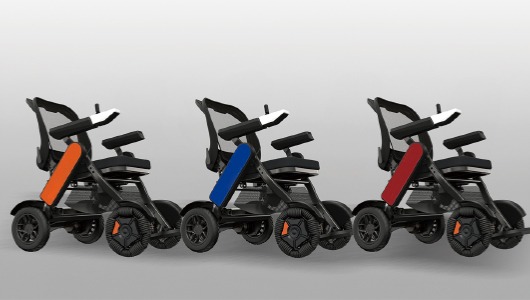
You can refer to the comparison information below to identify the SCIFFTO model best suited to your specific environment and intended use.
2.1 Quick Selection by Usage Scenario
Start by considering the requirements of your everyday environment, and focus on the features that will deliver the most significant improvements in actual use.
|
Primary Usage Scenario |
Core Needs |
Recommended Series |
Key Reasons |
|
Daily indoor / small apartments / tight spaces |
Small turning radius, compact storage, easy passage through doorways and elevators |
E100 / S100 Compact Folding Series |
Designed for limited spaces with quick folding and agile steering—ideal for apartments, corridors, and everyday indoor mobility |
|
Frequent travel & air travel |
Ultra-light frame, one-step folding, airline-friendly battery |
R100 Carbon Fiber Ultra-Light Series |
Frame weighs only about 9.8 kg (without battery), folds to just 56 × 27 × 43 cm, and offers airline-friendly battery options—easy for one person to lift and board |
|
All-day outdoor / higher weight capacity / intensive use |
Stability, high load capacity, range, and durability |
S300 / S300 Plus Heavy-Duty Comfort Series |
Approximately 60 kg frame, 150 kg+ weight capacity, four-wheel independent suspension, and 18–30 km range—suitable for full-day use and high-intensity institutional settings |
|
Easy short outdoor trips / community shopping / leisure |
Simple controls, lightweight folding, short-trip range |
F100 Mobility Scooter Series |
Handlebar-style controls are more intuitive; carbon-fiber version weighs about 13 kg and folds easily—perfect for community, mall, and short outdoor outings |
|
All-terrain / complex outdoor / specialized care needs |
4WD obstacle capability, positioning and transfer functions |
C400 All-Terrain Series |
4WD platform with stronger passability and positioning/transfer features—suited for special terrain or complex care requirements |
These recommendations provide a starting point rather than a final product selection. Individual specifications, available configurations, and operating requirements should still be reviewed before purchasing.
2.2 Quick Selection by User Type
Even under identical environmental conditions, mobility needs can vary significantly. Before selecting a specific model, consider the user’s individual circumstances and whether any additional assistance or support may be required.
- Independent users: Prioritize comfortable controls, suitable seating, and maneuverability for regular activities.
- Caregiver-assisted users: Consider wheelchair weight, folding convenience, and the effort required for lifting or transportation.
- Users requiring extended seating: Pay closer attention to seat dimensions, support, suspension, and weight capacity.
- Institutional or shared-use applications: Evaluate durability, maintenance requirements, adjustable configurations, and suitability for different users.
These factors will help narrow down the options to find an appropriate model. Even if a product is well-suited for a particular environment, it may still require adjustments to meet an individual’s specific needs.
2.3 Three Steps to Finding the Right SCIFFTO Model
Still unsure which model to choose? Follow these three steps to help you make a clearer decision:
Step 1 — Define Your Main Usage
Consider whether the wheelchair will be used primarily indoors, outdoors, during travel, or for specialized mobility needs.
Step 2 — Prioritize Essential Features
Identify the requirements that matter most, such as portability, seating comfort, weight capacity, control systems, or terrain capability.
Step 3 — Compare SCIFFTO Models
Continue to Section 3 — SCIFFTO Product Range for model-specific features, specifications, and links to detailed product guides.
3.SCIFFTO Electric Wheelchair & Mobility Scooter Product Range
SCIFFTO offers a range of specialized products designed to meet the primary mobility needs of various users. Each product line has a distinct positioning and set of core use cases. Provided below is a brief overview of these main lines; understanding these differences will help you narrow down the most suitable models before diving into a detailed comparison of technical specifications.
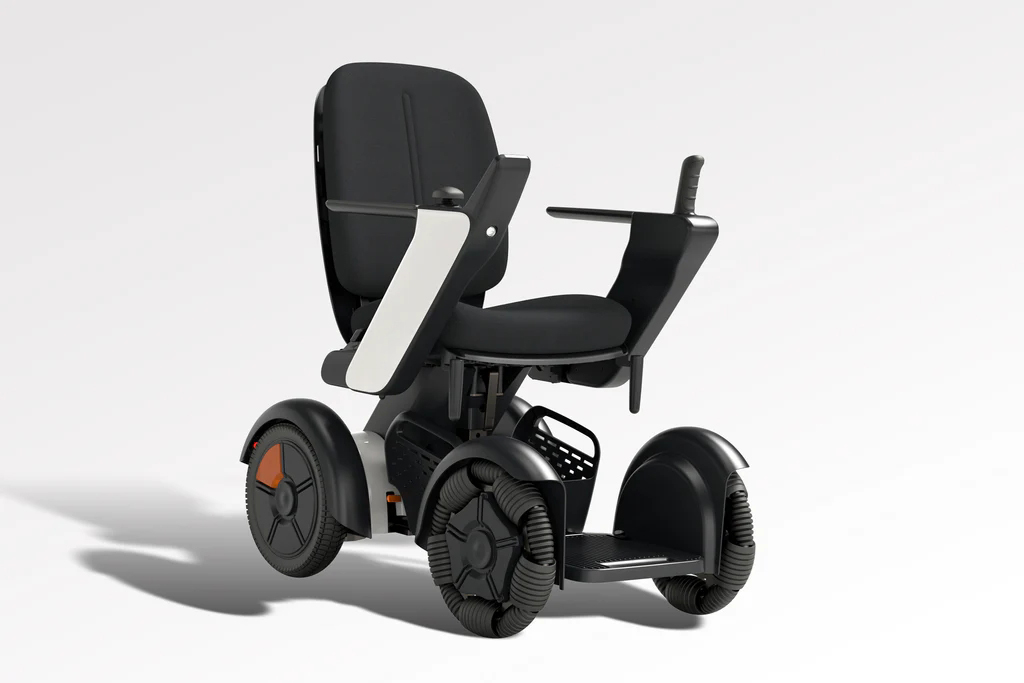
3.1 S300 / S300 Plus — Heavy-Duty & Comfort Series
The S300 series is designed for users and organizations that require a higher weight capacity, consistent stability, and reliable performance during frequent, everyday use. Key features include:
Key features include:
- Heavy-duty construction: Published weight capacity of 150 kg (330 lbs) or above, depending on configuration.
- Suspension and maneuverability: Four-wheel independent suspension, 12-inch omnidirectional front wheels, and a stated turning radius of approximately 79 cm.
- Battery options: Removable LiFePO4 batteries, with 10 Ah and 20 Ah configurations and a published range of approximately 18–30 km.
- Driving and safety features: Electromagnetic braking, safety lighting, and intelligent control options on supported configurations.
S300 vs. S300 Plus
S300 focuses on durable everyday performance, while S300 Plus offers enhanced seating comfort and control refinements. Buyers should compare available seating and control configurations to determine which model better meets their requirements.
View full specifications and a detailed analysis: Full specifications and detailed analysis: “Complete Guide to SCIFFTO S300 Series”.
3.2 R100 – Carbon Fiber Ultra-Light Series
SCIFFTO R100 is built around portability. Its T700 carbon-fiber construction reduces frame weight while maintaining a compact structure suitable for frequent transportation.
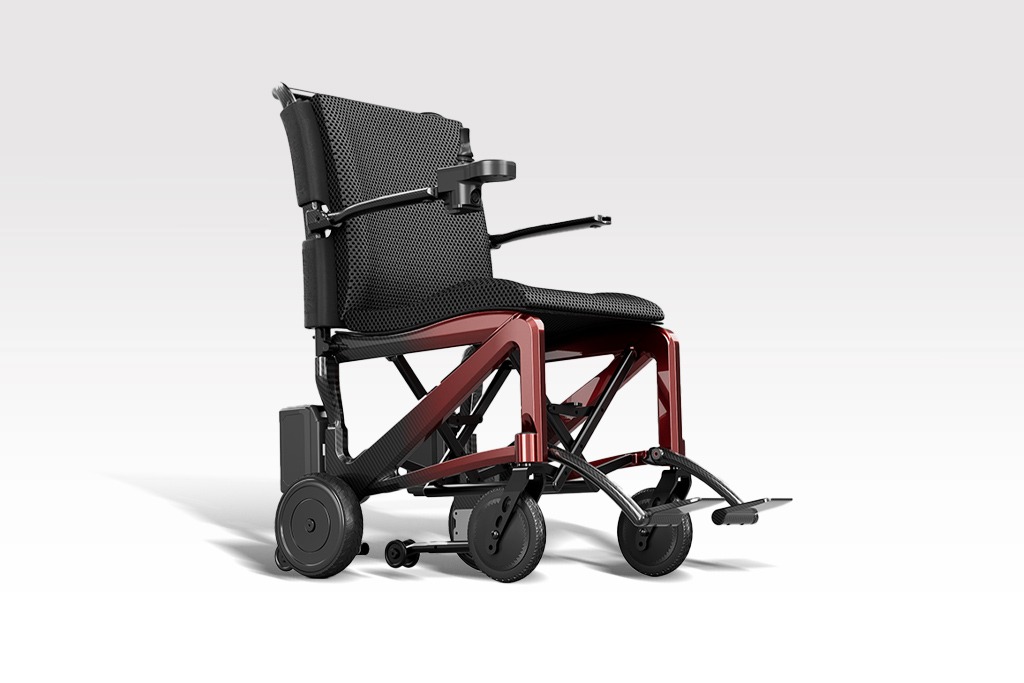
Key features include:
- Ultra-light frame: Standard R100 weighs approximately 9.8 kg (21.6 lbs) without the battery.
- Compact folding: Folds to approximately 56 × 27 × 43 cm for convenient vehicle loading and storage.
- Removable battery: Multiple lithium battery configurations are available, including a 6 Ah travel-oriented option.
- Driving system: Dual hub motors and 360° steering support controlled everyday maneuvering.
R100 Pro offers a different motor configuration and weighs approximately 11.8 kg without the battery. Buyers should distinguish between these versions when comparing total transport weight.
R100 series is particularly relevant when lifting weight and storage space are major purchasing considerations.
For further details, visit the: “R100 Ultra-Light Carbon Fiber Wheelchair Travel Guide.”.
3.3 F100 – Mobility Scooter Series
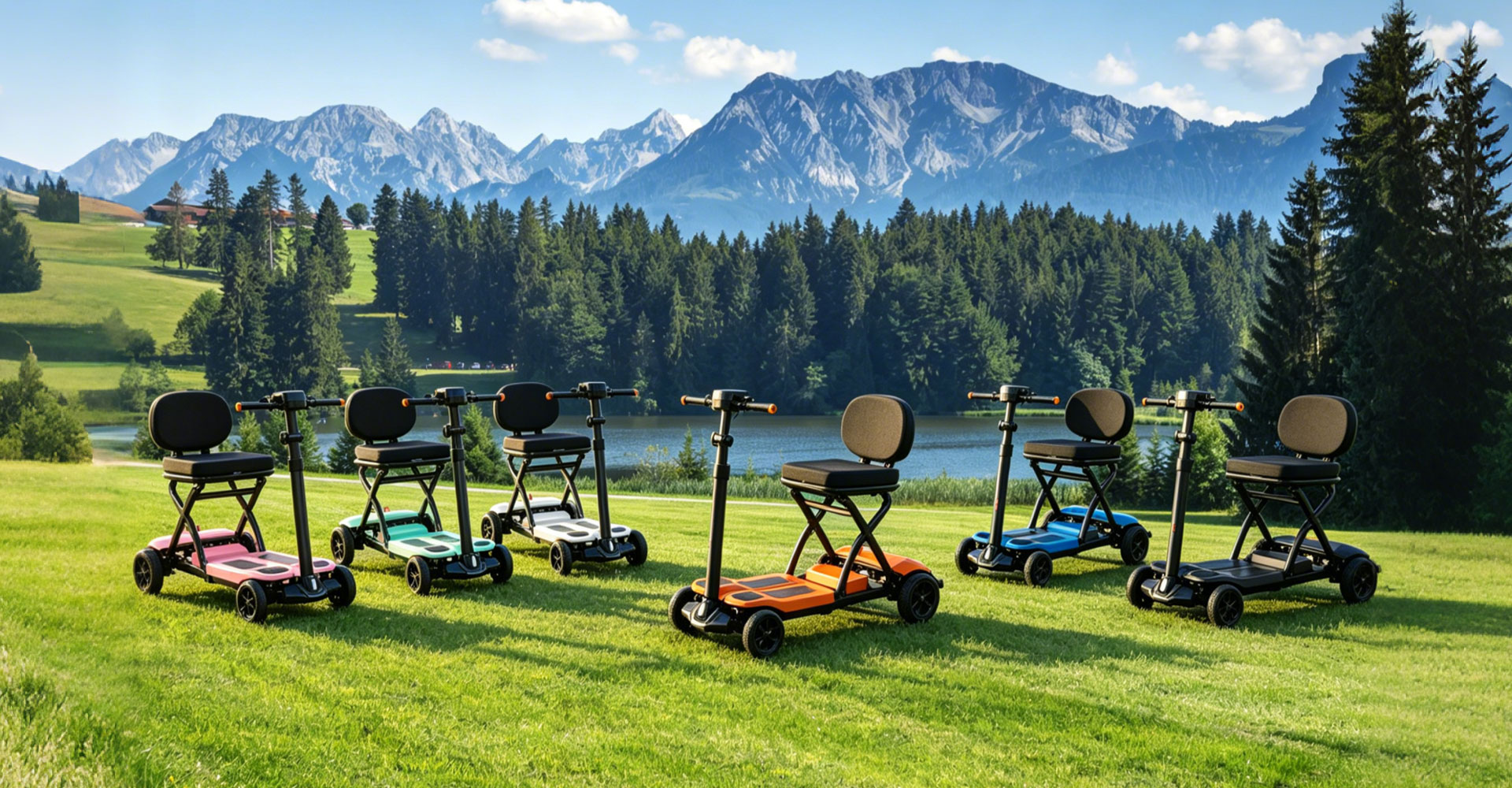
Not every mobility need requires an electric wheelchair. The SCIFFTO F100 is a foldable mobility scooter featuring a simple handlebar-based control system, designed for practical use over short to medium distances outdoors.
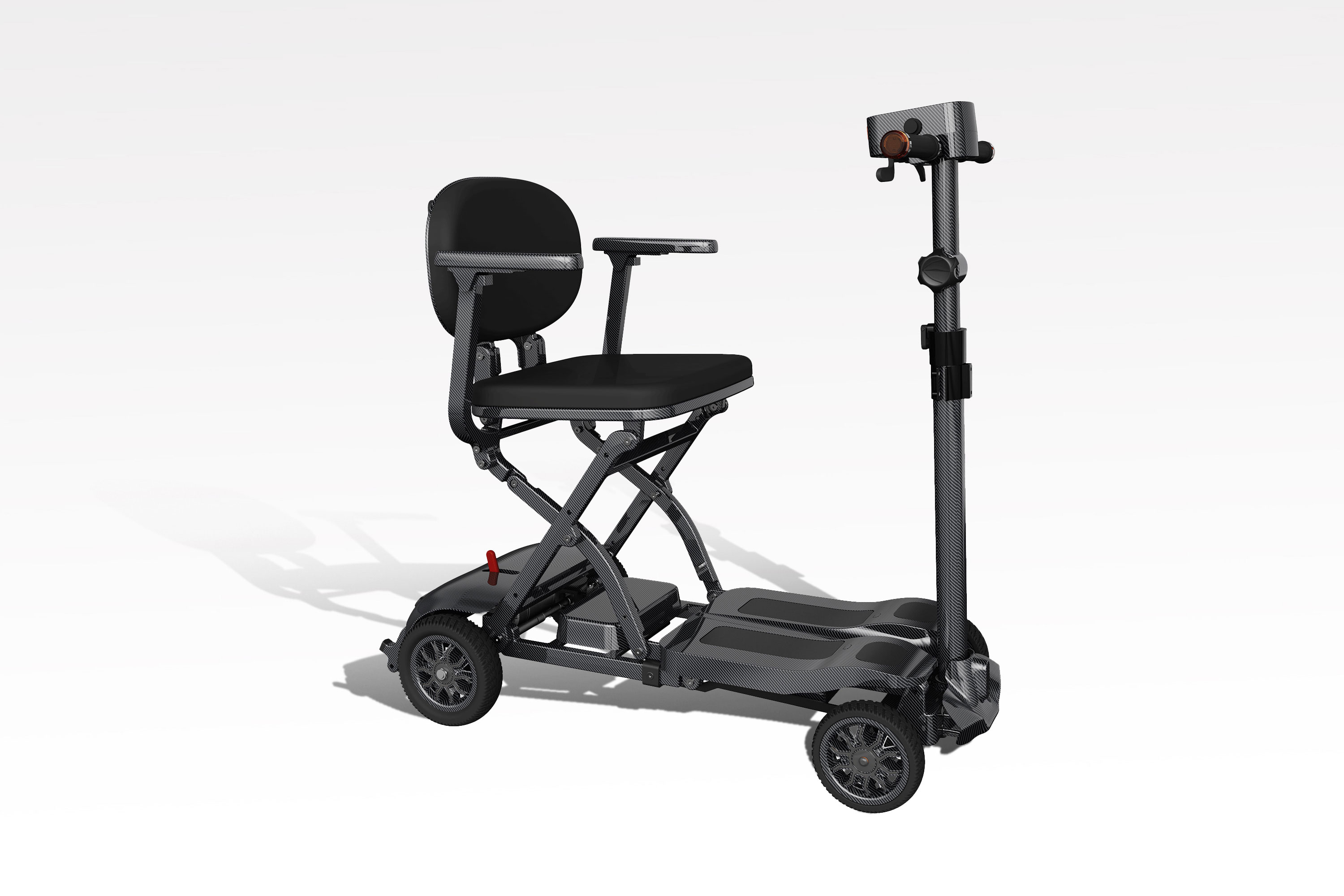
Key features include:
- Two frame options: F100-C (carbon fiber, ≈ 13 kg) and F100-M (magnesium alloy, ≈ 20 kg)
- Manual folding structure with compact folded dimensions
- 180 W motor, up to 6 km/h, published range around 20 km
- Removable battery, adjustable armrests, and 6-inch LCD display
- Intuitive tiller-style operation preferred by many users who find joysticks less natural
The decision between an F100 and an electric wheelchair depends on the user’s personal control preferences, seating requirements, and specific usage environment. For further details, please refer to our "F100 Mobility Scooter Technical Overview".
3.4 E100 / S100 – Compact Folding Series
SCIFFTO E100 and S100 both offer folding designs for everyday mobility, but they address different priorities.
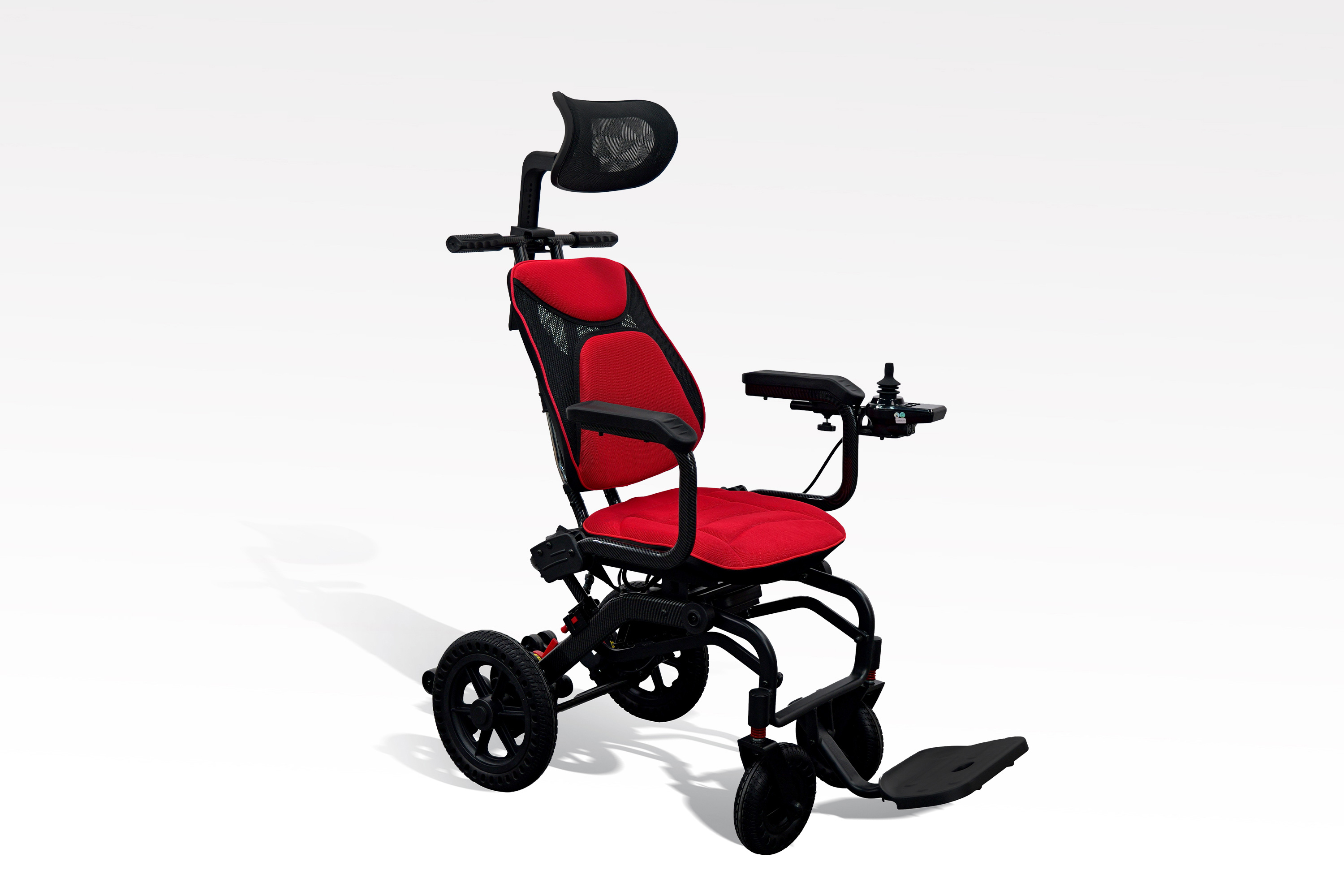
E100 — Lightweight Portability
E100 weighs approximately 18.8 kg without the battery. Its compact folding structure and dual-motor system make it a practical option when storage space and frequent transportation matter.
S100 — Indoor Maneuverability and Intelligent Control
S100 weighs approximately 30 kg and places greater emphasis on driving control and daily comfort. Features include four-wheel independent suspension, omnidirectional wheel technology, and selected intelligent options such as app connectivity and obstacle sensing.
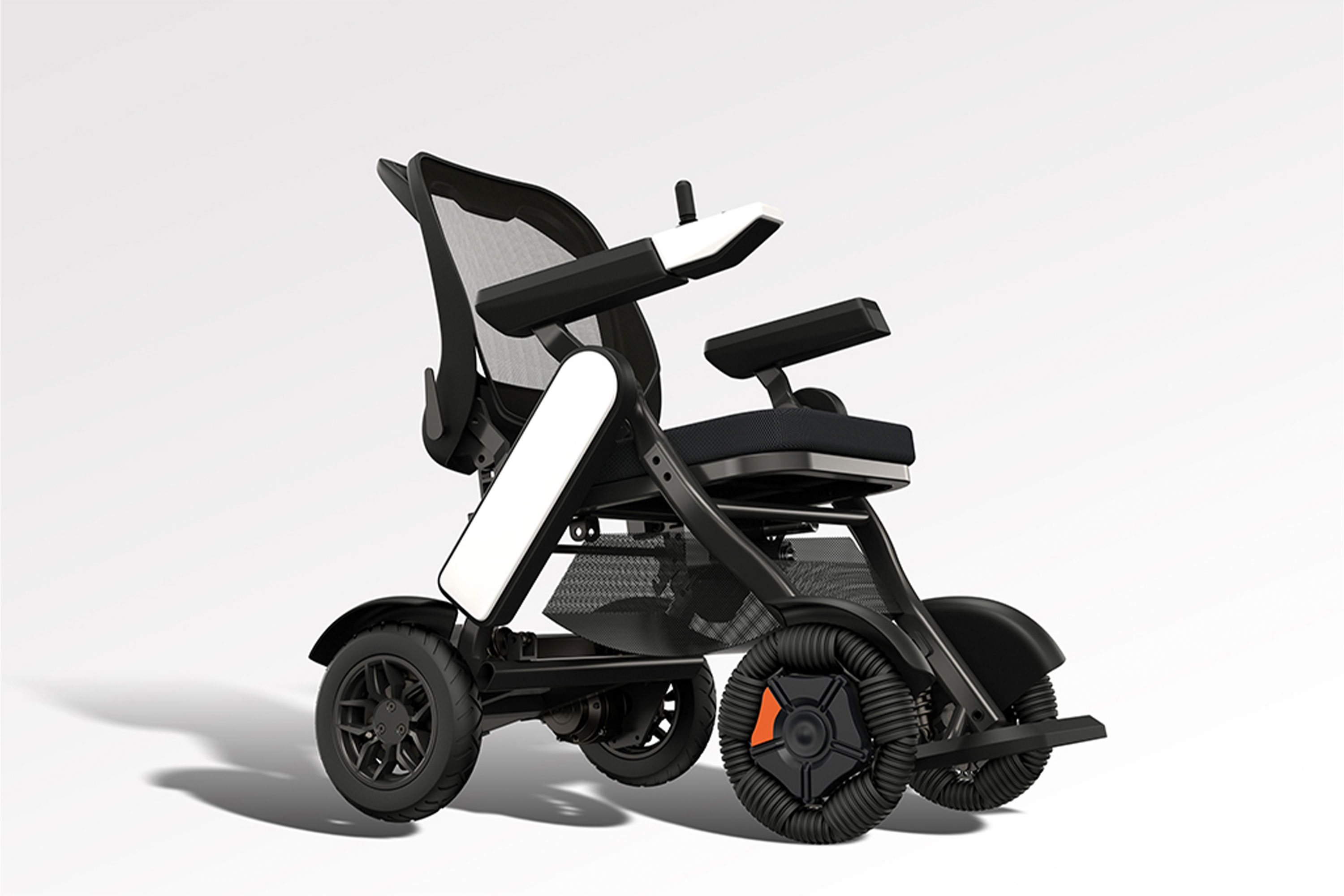
The difference is straightforward: E100 prioritizes lighter handling, while S100 offers a more feature-rich platform for regular indoor mobility.
Read our “SCIFFTO E100 vs. S100 comparison guide” to learn more about the differences between the two.
3.5 C400 – All-Terrain Series
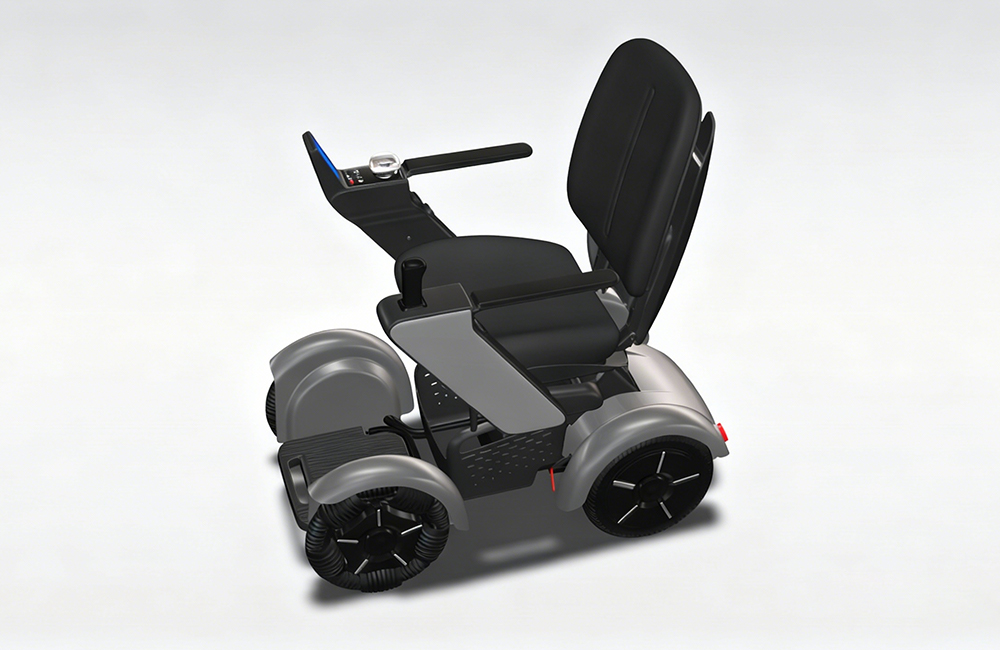
SCIFFTO C400 is a four-wheel-drive electric wheelchair platform developed for challenging terrain and specialized mobility requirements. Its multi-motor driving system and large pneumatic tires provide traction across suitable uneven surfaces, while different configurations extend its positioning and accessibility functions.
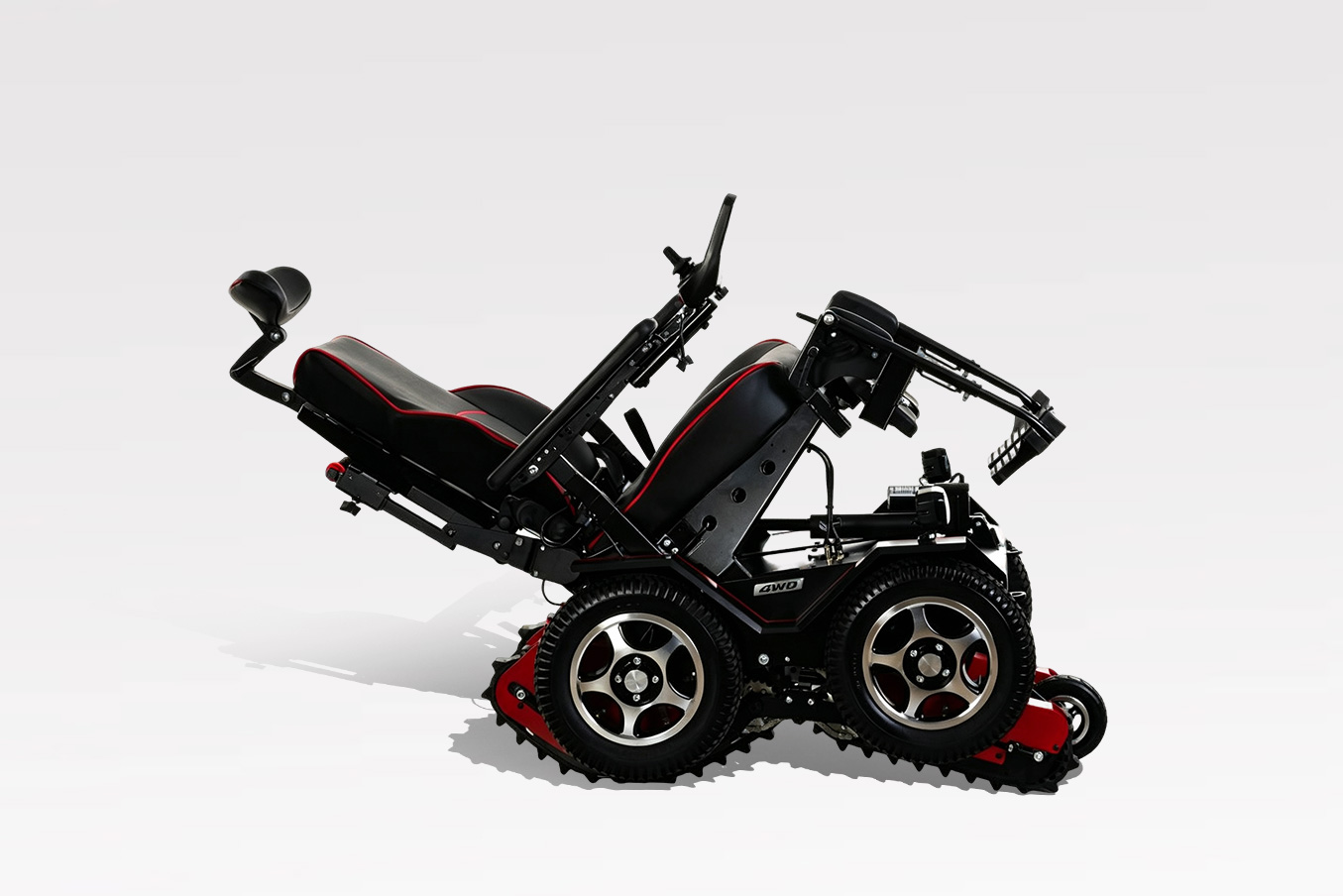
The C400 series includes three specialized variants:
- C400 Verticalizing: Provides powered sit-to-stand positioning support.
- C400 Horizontal: Supports horizontal positioning, seat-height adjustment, and bed-to-chair transfer assistance.
- C400 Stair Climbing: Features a dedicated stair-climbing system for specialized multi-level access.
These variants share a common all-terrain platform but differ in their available functions and technical specifications.
Unlike SCIFFTO's lightweight folding models, C400 prioritizes driving capability and specialized assistance rather than frequent lifting or compact transportation.For further details, please refer to our C400 Series or C400 Series Technical Overview.
3.6 Full-Series Core Specification Comparison Table
Each product in the SCIFFTO series serves a specific purpose. The specification table below highlights each series, helping you narrow down your options and find the product that best suits your needs.
|
Series |
Approximate Weight |
Main Design Focus |
Key Features |
Primary Application |
Series |
Approximate Weight |
Main Design Focus |
|
R100 |
9.8 kg without battery |
Ultra-light portability |
Carbon-fiber frame, compact folding, removable battery |
Frequent transportation |
R100 |
9.8 kg without battery |
Ultra-light portability |
|
E100 |
18.8 kg without battery |
Lightweight daily mobility |
Folding frame, dual-motor drive |
Compact storage and travel |
E100 |
18.8 kg without battery |
Lightweight daily mobility |
|
S100 |
Around 30 kg |
Indoor maneuverability |
Independent suspension, intelligent control options |
Regular indoor mobility |
S100 |
Around 30 kg |
Indoor maneuverability |
|
S300 / S300 Plus |
Around 60 kg for S300 |
Heavy-duty support and comfort |
Reinforced frame, suspension, advanced control options |
Extended daily use |
S300 / S300 Plus |
Around 60 kg for S300 |
Heavy-duty support and comfort |
|
F100 |
13 kg F100-C / 20 kg F100-M carry weight |
Foldable scooter mobility |
Tiller steering, removable battery; smart features on Pro |
Community and outdoor trips |
F100 |
13 kg F100-C / 20 kg F100-M carry weight |
Foldable scooter mobility |
|
C400 |
Varies by configuration |
All-terrain and specialized functions |
4WD, model-dependent positioning and transfer systems |
Challenging terrain and specialized mobility |
C400 |
Varies by configuration |
All-terrain and specialized functions |
For in-depth technical details, real-world user experiences, and configuration options, please visit the individual product pages. In the next section, we will break down the most critical hard specifications—such as weight, folded dimensions, battery regulations, range, and safety systems—in clear, accessible language.
4. Key Electric Wheelchair Specifications Explained
Technical specifications are useful only when they reflect how an electric wheelchair will perform in practice. Beyond comparing published figures, buyers should understand what each specification means for transportation, comfort, maneuverability, and safety.
4.1 Why Weight Really Matters (kg & lbs)
Weight is one of the first specifications people check and one of the most frequently underestimated in daily life.Even if a wheelchair is very easy to maneuver, it can still be inconvenient for caregivers if they have to lift it into a vehicle multiple times a week or carry it up and down stairs. Conversely, if a user spends most of their time in the wheelchair and rarely needs to move it on their own, a heavier, more stable model might be a better long-term choice.
Approximate net weights across the SCIFFTO range illustrate the practical difference:
- Electromagnetic braking provides consistent stopping power.
- Integrated lighting (headlights, warning lights) improves visibility in low-light conditions.
- App and remote-control options (available on the S300 series) allow caregivers to assist or retrieve the chair.
- The S300’s AiPass system uses an area-perception matrix to support obstacle awareness.
- Removable batteries simplify charging and transport across the range.
For frequent vehicle loading or air travel, the R100 and E100 make single-person handling realistic. For hospitals, airports, and rehabilitation centers that prioritize durability and all-day stability, the higher mass of the S300 series is usually accepted as a necessary trade-off. Caregivers should test the actual lifting weight of any candidate model rather than relying solely on the published net figure (batteries and accessories add mass).
4.2 Folded Dimensions and Vehicle / Storage Fit
Foldable electric wheelchairs may not always be compact enough to fit into every vehicle or storage space.
Compare the dimensions (length, width, and height) of the wheelchair when folded against the available space. Pay attention to the dimensions of the vehicle's trunk opening and the specific size of the storage area; also, determine whether any components need to be removed before loading.
Even if a wheelchair can fit inside a vehicle, a narrow opening can make the loading and unloading process quite difficult.
If you need to transport the wheelchair frequently, be sure to verify its dimensions when folded, and familiarize yourself with the specific steps for folding, securing, and unfolding it.
4.3 Battery and Airline Compliance
Airline acceptance is governed primarily by the watt-hour (Wh) rating of the lithium battery, not by marketing claims of “airline-friendly.” Most commercial airlines apply limits around 100 Wh for spare batteries carried in the cabin, with higher ratings sometimes allowed under specific conditions and with airline approval.
SCIFFTO addresses this reality in different ways across the range:
- The R100 offers a 6 Ah removable lithium option specifically positioned for common airline limits. Total system weight remains low, and the battery can be removed for inspection or carry-on.
- The S300 series uses removable LiFePO4 packs (10 Ah / 20 Ah) and is marked air-travel approved on official pages; however, the exact Wh rating of the installed battery must still be verified with the airline before each journey.
- Other models require the same case-by-case confirmation of Wh rating and current carrier policy.
Always check the label on the specific battery that will travel and contact the airline several days in advance. Rules can change, and acceptance is never automatic. For a full explanation of current lithium battery rules for electric wheelchairs, see the dedicated article: “Flying with an Electric Wheelchair 2026 – Airline Lithium Battery Rules Explained.”
4.4 Driving Range, Speed, and Maneuverability
Published performance figures are useful for comparing electric wheelchairs, but actual results vary with terrain, user weight, battery condition, and driving habits.
|
Specification |
What buyers should consider |
|
Driving range |
Can it complete regular journeys without frequent charging? |
|
Maximum speed |
Is it appropriate for the intended environment? |
|
Climbing ability |
Can it handle expected slopes within safe operating limits? |
|
Turning radius |
Can it maneuver through corridors, doorways, and confined spaces? |
|
Ground clearance |
Can it handle expected surface transitions? |
A long driving range does not necessarily translate to a better everyday user experience. In indoor environments, the vehicle's overall width and its turning radius are more significant factors.
4.5 Weight Capacity and Safety
Weight capacity is a safety limit, not simply a measure of wheelchair strength.
When selecting a model, consider the user's body weight together with any items carried on the wheelchair. Avoid exceeding the manufacturer's rated capacity.
Seating dimensions also require attention. Seat width, depth, backrest support, and armrest position can affect comfort and daily operation even when the wheelchair meets the required load rating.
For institutional procurement, these measurements should be reviewed alongside the needs of the intended user population.
4.6 Smart Features and Safety Systems
Safety features enhance both maneuverability and convenience, which is particularly beneficial in busy indoor environments or during extended daily use.
Key technologies include:
- AiPass Obstacle Avoidance: Detects nearby obstacles to support safer navigation.
- Smart App and Remote Control: Enables remote operation, GPS tracking, and OTA updates on supported models.
- Intelligent Driving Control: Supports coordinated four-wheel drive, stability, and maneuverability on C400 models.
- Powered Positioning: Provides standing, reclining, and transfer assistance on selected C400 configurations.
- Smart Safety Systems: Includes electromagnetic braking, radar sensing, reverse obstacle detection, and automatic stopping on applicable models.
Features vary by model. SCIFFTO combines intelligent assistance with practical mobility functions to meet the diverse needs of users in their daily lives and specific environments.
5. Choosing the Right Electric Wheelchair for Different Needs
A suitable electric wheelchair must be capable of operating reliably within its intended environment. Beyond focusing on specific technical parameters, one should also consider how the device will be operated, transported, stored, and maintained during daily use.
5.1 Air Travel
Frequent travel involves repeated folding, lifting, and handling. A wheelchair may perform well during daily use but become inconvenient when it must be loaded into a vehicle or prepared for a flight.
Prioritize manageable lifting weight, compact folded dimensions, and removable battery arrangements. Confirm airline requirements separately from general travel suitability.
For travelers who regularly depend on assistance, folding simplicity and the number of removable components are also worth considering.
Full preparation checklist and rules are in the R100 Travel Guide and the dedicated airline battery article.
5.2 Daily Home Use and Navigating Confined Spaces
Indoor mobility depends on more than a small turning radius.
Doorway clearance, overall wheelchair width, furniture placement, and access to bathrooms or elevators can determine whether a model works comfortably at home.
Measure frequently used spaces before choosing a wheelchair. Consider how the device turns, reverses, and approaches tables or other furniture.
For further purchasing advice, please refer to our guide: Electric Wheelchairs for Small Homes and Confined Spaces.
5.3 Short-Distance Outdoor / Community / Leisure Travel
When traveling outdoors, you may encounter uneven surfaces, inclines, changes in ground material, or significant distances between charging points.
Please select an appropriate drive system based on the expected terrain; do not rely solely on the manufacturer’s advertised range as your primary criterion.
The choice of control method is also crucial. The SCIFFTO F100 utilizes a steering mechanism similar to that of a mobility scooter, whereas other electric wheelchairs in the SCIFFTO series typically employ a joystick. Users should consider which control method allows for the most comfortable and safe operation.
If you anticipate navigating complex terrain, be sure to review the operational limitations for your specific model; do not assume that all outdoor-capable wheelchairs are designed for all-terrain use.
5.4 Caregiver Perspective: Reducing the Burden of Handling
For caregivers, the primary considerations are low weight and quick, easy folding.
When selecting a wheelchair, consider the following factors:
- Total weight (including detachable components)
- Folding mechanism and ease of operation
- Dimensions when folded (and compatibility with vehicle storage)
- Convenience of removing and transporting the battery
The SCIFFTO R100 is designed with a focus on lightweight portability, while the E100 offers an alternative foldable option suitable for daily outings.
5.5 Medical Institutions, Hospitals, and Rehabilitation Centers
The scope of assessment for institutional procurement is broader than that for selecting a wheelchair for an individual user.
Purchasers should consider factors such as expected frequency of use, the weight range of users, cleaning requirements, ease of maintenance, charging arrangements, and the availability of spare parts.
In shared-use settings, adjustable configurations and straightforward, easy-to-follow operational procedures are particularly important.
Before placing bulk orders, it is essential to confirm product specifications, relevant documentation, and after-sales service arrangements with the manufacturer. Whenever possible, sample units should be evaluated based on specific operational requirements.
5.6 Airports, Public Transit Hubs, and Hotels
Navigating public environments requires more than just portability; it demands the ability to maneuver flexibly across various floor surfaces and through crowded spaces.
Thanks to its lightweight design, the SCIFFTO R100 is easy to carry. The E100 and S100 models offer foldable options, making them well-suited for daily travel; for those who require a higher weight capacity and greater comfort during extended periods of use, the S300 is an ideal choice.
When using these devices in airports or public transit hubs, please check in advance with the relevant service providers regarding accessibility requirements, boarding procedures, and any specific regulations or restrictions concerning such equipment.
6. Lightweight vs. Heavy-Duty Electric Wheelchairs
Lightweight and heavy-duty electric wheelchairs serve different purposes. Their primary distinction lies not merely in weight, but in how their respective designs strike a balance between portability, seat support, weight capacity, and performance in daily use.
6.1 Core Comparison
The core distinction lies in how each type balances portability, structural support, and everyday performance.
|
Feature |
Lightweight Electric Wheelchair |
Heavy-Duty Electric Wheelchair |
|
Weight |
Lighter, easier to transport |
Heavier, reinforced frame |
|
Folding |
Usually compact and travel-friendly |
Often larger and harder to transport |
|
Weight capacity |
Varies by model |
Generally higher load capacity |
|
Comfort |
Focuses on portability and daily use |
Often provides enhanced seating and suspension |
|
Best suited for |
Travel, home use, frequent transportation |
Higher-capacity needs and extended daily use |
Weight alone does not determine wheelchair performance. Seating dimensions, battery range, and maneuverability should also match the user's requirements.
6.2 Practical Advantages and Limitations
Lightweight electric wheelchairs are easier to maneuver and store, making them ideal for frequent travel or situations where the chair needs to be moved often. However, some compact models may offer less seating space or a lower weight capacity.
Heavy-duty electric wheelchairs prioritize reinforced construction, higher weight limits, and more supportive seating. Their primary drawback is limited portability; this can be a disadvantage if the wheelchair needs to be moved frequently or transported via vehicle.
Ultimately, the right choice depends on which trade-offs you prioritize for your daily needs.
6.3 Choosing Between SCIFFTO Lightweight and Heavy-Duty Models
SCIFFTO offers several electric wheelchair series with different design priorities.
|
SCIFFTO Series |
Positioning |
Recommended use |
|
R100 |
Ultra-light carbon-fiber |
Frequent travel and easy transportation |
|
E100 |
Lightweight folding |
Compact storage and everyday mobility |
|
S100 |
Balanced folding design |
Daily indoor and outdoor use |
|
S300 / S300 Plus |
Heavy-duty and comfort-focused |
Higher weight capacity and extended daily use |
For frequent travel or caregiver-assisted transportation, R100 and E100 are worth considering because of their lightweight, folding designs.
For users who prioritize stability, higher load capacity, and seating comfort, S300 and S300 Plus may be more suitable.
S100 provides an alternative for those seeking a balance between folding convenience and everyday performance.
For a more detailed comparison, see Lightweight vs. Heavy-Duty Electric Wheelchairs.
7. Common Mistakes to Avoid
Even a wheelchair with impressive specifications may not suit its intended use. Before making a decision, avoid these common mistakes.
7.1 Focusing Only on Price
A lower purchase price does not reflect a product’s full range of features; it fails to account for factors such as travel convenience, ride comfort, or long-term maintenance requirements. Evaluate the product based on its overall characteristics rather than focusing exclusively on the price.
7.2 Overlooking Airline Regulations Regarding Batteries
A folding mechanism does not necessarily mean a wheelchair is easy to transport, nor does it guarantee compliance with airline regulations. Always verify the total transport weight, dimensions when folded, and any specific requirements regarding batteries.For more details, please refer to the "Guide to Batteries for Air Travel" published by SCIFFTO.
7.3 Overestimating Range While Neglecting Maneuverability
Actual travel range is influenced by various factors, including terrain, the user's body weight, and the condition of the battery. If a wheelchair has an excessively large turning radius, it may be difficult to maneuver in tight spaces, regardless of how long its range might be.
7.4 Ignoring Convenience for Caregivers
Wheelchair should not only provide comfort for the user but also be convenient for caregivers to handle or for the user to operate on a daily basis. Before placing an order, confirm the specific model configuration and prioritize your core requirements.
8. Why Partner with SCIFFTO for Electric Wheelchairs?
Selecting an electric wheelchair manufacturer requires more than comparing product catalogs. For distributors, mobility brands, and institutional purchasers, engineering capability, configuration flexibility, product consistency, and technical support can influence long-term sourcing decisions.
SCIFFTO develops electric wheelchairs and mobility scooters across multiple product platforms, combining mechanical design with electronic control and intelligent mobility technologies.
8.1 Engineering and Manufacturing Capabilities
SCIFFTO's product development approach combines structural engineering, driving systems, electronic controls, and mobility-focused design.
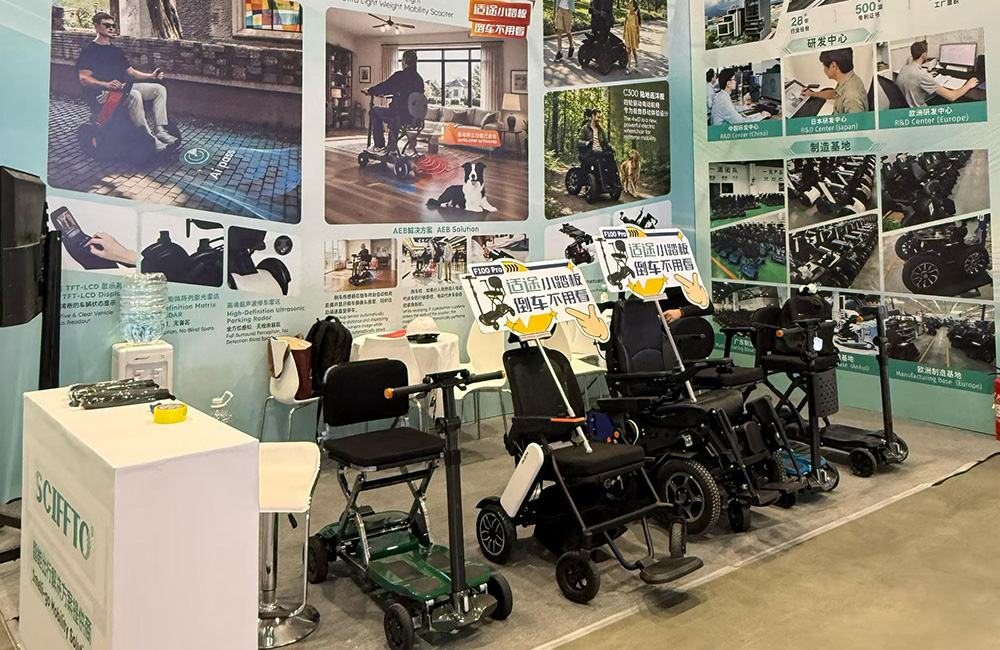
Its product range demonstrates different engineering priorities, from carbon-fiber lightweight construction to independent suspension, four-wheel-drive platforms, and sensor-assisted control systems.
For business buyers, these capabilities matter when evaluating whether a manufacturer can support different product requirements rather than supplying only a limited range of standard models.
Technical discussions should cover the intended application, required performance, available configurations, and any product modifications needed before production.
8.2 OEM/ODM and Product Customization
SCIFFTO supports OEM/ODM cooperation for businesses developing their own electric wheelchair product lines or expanding an existing mobility portfolio.
Depending on the model and project requirements, customization discussions may include:
- Branding, logos, and exterior appearance
- Battery and driving system configurations
- Seating, controls, and optional features
- Product documentation and market-specific requirements
- Order quantities and production arrangements
Not every feature can be modified on every platform. Available options, development requirements, minimum order quantities, and production schedules should be confirmed for each project.
8.3 Quality Control and Product Consistency
For repeat orders, consistency is as important as initial product performance.
Buyers should evaluate how a manufacturer manages component specifications, assembly processes, functional testing, and product changes between production batches.
SCIFFTO's manufacturing and quality-control information provides a starting point for these discussions. Before placing a bulk order, request the documentation relevant to the selected model, including available test records, applicable certifications, and product specifications.
Certification requirements vary by destination market and product configuration. Buyers should verify that the documentation supplied applies to the exact model being purchased.
8.4 Distributor and Institutional Procurement Support
Different markets require different product combinations. A distributor may need lightweight travel models alongside higher-capacity electric wheelchairs, while an institution may prioritize maintenance, operating consistency, and suitability for repeated use.
SCIFFTO's multi-series product range allows buyers to evaluate several mobility categories within one manufacturer's portfolio.
For a more effective sourcing process, share your target market, intended applications, expected order volume, and technical requirements when requesting a quotation.
This helps establish which SCIFFTO platforms and configurations are suitable before detailed commercial discussions begin.
9. Final Recommendations and Next Steps
Choosing a suitable electric wheelchair begins with understanding the intended application and ends with confirming the exact product configuration.
Before making a final decision, review the specifications that matter most for your requirements, including weight, dimensions, battery options, seating, driving performance, and available safety features.
9.1 Confirm Your Product Requirements
Once you have shortlisted a SCIFFTO series, compare its available configurations and identify any requirements that need further confirmation.
For business procurement, consider product documentation, destination-market requirements, order quantities, and long-term supply needs alongside technical performance.
9.2 Contact SCIFFTO for Product and OEM/ODM Inquiries
SCIFFTO is an electric wheelchair manufacturer offering lightweight folding, heavy-duty, and specialized mobility solutions, alongside mobility scooters.
Whether you are comparing individual models, planning institutional procurement, or developing an OEM/ODM product line, our team can discuss available specifications and suitable configurations.
Contact SCIFFTO to request technical information, discuss customization requirements, or obtain a quotation for your project.
9.3 Related In-Depth Guides
Use these focused articles for deeper technical and scenario-specific information:
- Complete Guide to SCIFFTO S300 Series Heavy-Duty Electric Wheelchair
- R100 Ultra-Light Carbon Fiber Wheelchair Travel Guide
- F100 Series Mobility Scooter Technical Overview
- SCIFFTO E100 vs S100 Compact Folding Electric Wheelchairs Compared
- C400 Series All-Terrain Power Chair Technical Overview
- Flying with an Electric Wheelchair 2026 – Airline Lithium Battery Rules Explained
- Electric Wheelchairs for Small Homes and Tight Spaces
- Lightweight vs Heavy-Duty Electric Wheelchairs
These resources, together with the comparison tables and decision paths in this guide, give you a complete framework for evaluating SCIFFTO electric wheelchairs and mobility scooters in 2026.
10. FAQs
10.1 How Do I Choose Between a Lightweight and Heavy-Duty Electric Wheelchair?
Start with your main priorities. Lightweight models are generally easier to transport, while heavy-duty models often offer higher weight capacities and more substantial seating support. Compare the exact specifications rather than relying on the category name alone.
10.2 Can SCIFFTO Electric Wheelchairs Be Taken on Airplanes?
Selected SCIFFTO models offer removable battery configurations intended for travel. Airline acceptance depends on battery specifications, wheelchair design, and applicable regulations. Confirm the exact battery Wh rating and airline requirements before departure.
10.3 What Is the Difference Between an Electric Wheelchair and a Mobility Scooter?
Electric wheelchairs generally use joystick controls and may provide different seating and support options. Mobility scooters, such as SCIFFTO F100, use tiller-style steering. The appropriate choice depends on control ability, seating requirements, and intended use.
10.4 Does SCIFFTO Offer OEM/ODM Electric Wheelchair Manufacturing?
SCIFFTO supports OEM/ODM cooperation for mobility businesses. Available customization options depend on the product platform and project requirements. Contact SCIFFTO to discuss branding, configurations, technical specifications, and order arrangements.
10.5 What Certifications Are Available for SCIFFTO Electric Wheelchairs?
Certification and testing documentation may differ by product model, configuration, and destination market. Buyers should request current, model-specific documents and confirm that they meet applicable import and regulatory requirements.
10.6 Can Distributors Request Customized Electric Wheelchair Configurations?
Customization discussions may cover branding, battery options, controls, seating, and other supported product features. Feasibility, minimum order quantities, and production requirements should be confirmed with SCIFFTO for each project.