
Intelligent mobility is becoming more practical when technology can respond to the environment around the vehicle.
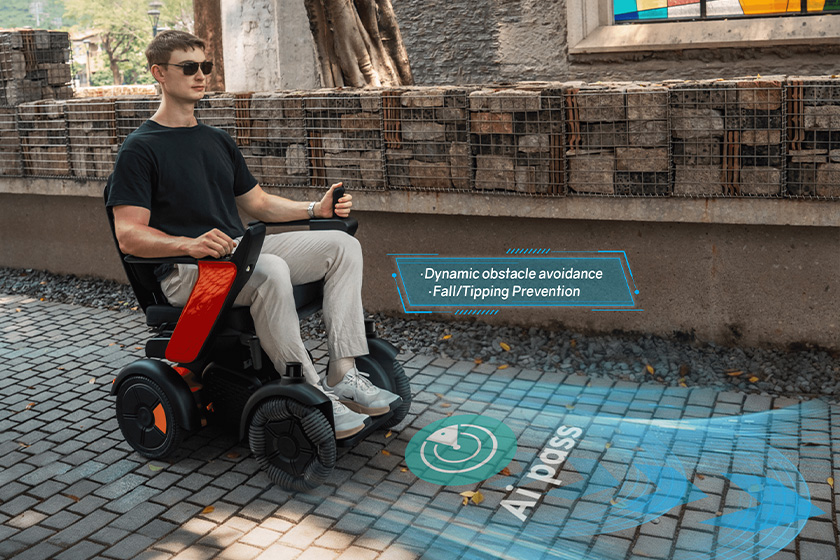
For the SCIFFTO S300 power chair, obstacle avoidance is integrated into the driving experience through the AiPass system. Instead of relying only on the user's visual judgment, the S300 can perceive objects around its path and provide additional environmental information during movement.
This approach is particularly valuable in everyday spaces where room to maneuver can be limited.
Making Obstacle Information Easier to Understand
When driving a power chair, users need to continuously judge the space around the vehicle.
An object may appear directly ahead, slightly to one side, or close to the vehicle's path. In a narrow environment, even a small obstacle can affect the available driving space.
The S300 uses AiPass to provide additional environmental awareness while the vehicle is moving.
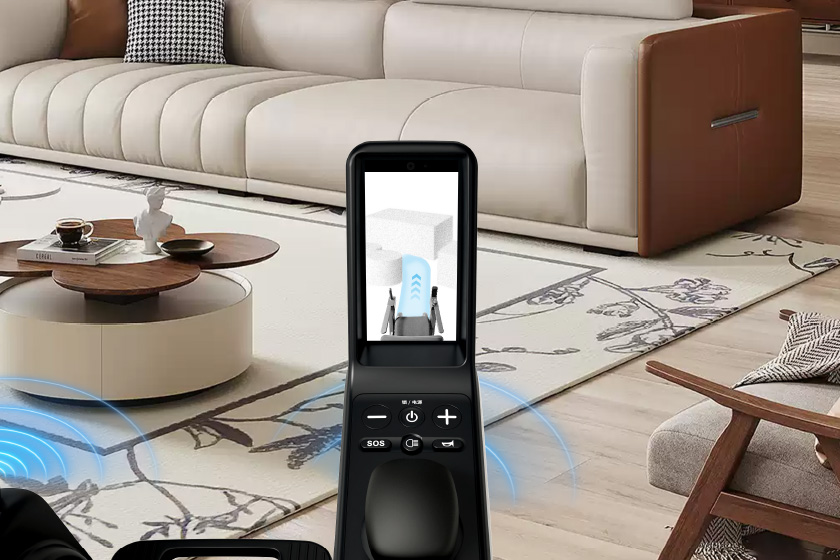
More importantly, detected objects can be presented through the vehicle display, allowing the user to see relevant obstacle information rather than receiving an invisible system response.
This creates a clearer connection between what the vehicle detects and what the user experiences.
Turning Vehicle Perception Into Visible Information
One of the practical advantages of intelligent mobility is making complex sensing easier for the user to understand.
The S300 display can show detected objects within the vehicle's sensing environment. This gives the user another reference when assessing the available space around the power chair.
The purpose is not to replace the user's judgment.
Instead, the system provides additional information that can support the user's decision while driving.
For personal mobility products, this interaction between sensing technology and the user interface is important. A detection system becomes more useful when the information it collects can be understood during actual operation.
Why Area Perception Matters in a Corridor
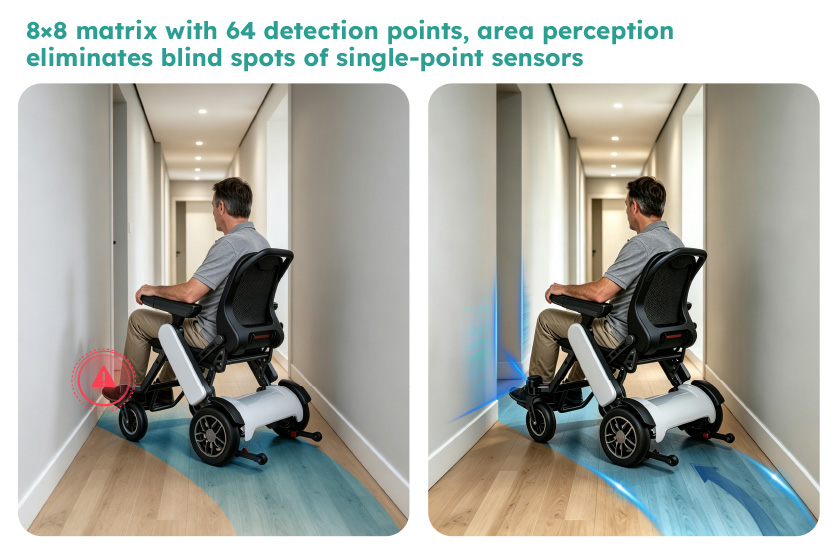
A corridor may look like a straightforward environment, but it can present a demanding situation for a power chair.
The vehicle has limited space on both sides, while walls, furniture, people, or other objects may be positioned close to the driving path.
The S300 uses an 8 × 8 matrix with 64 detection points to support area perception.
Rather than concentrating detection on a single point, the matrix collects information across multiple detection points. This gives the system a broader view of the space surrounding the vehicle.
When the S300 moves through a corridor, this area-based perception can help identify objects that may not be directly centered in the vehicle's path.
For a personal mobility product, understanding the surrounding space can be just as important as identifying an obstacle directly ahead.
From Detecting Obstacles to Supporting Movement
Obstacle detection alone does not create an intelligent mobility experience.
The value comes from what the vehicle can do with the information it receives.
With AiPass integrated into the S300, environmental information can become part of the vehicle's movement logic. The system is designed to support intelligent obstacle avoidance while the user remains responsible for operating the vehicle.
This creates a balance between automation and user control.
The vehicle can provide additional awareness of the surrounding environment without turning the driving experience into a fully automated process.
Built for Close and Confined Spaces
Personal mobility products are frequently used in environments where space is limited.
A user may need to move through a hallway, approach a doorway, pass around furniture, or maneuver within a compact indoor area.
In these situations, the distance between the vehicle and an obstacle can change quickly.
The S300's area perception approach is designed to provide more information about nearby surroundings, helping make intelligent obstacle awareness part of everyday driving rather than a feature intended only for unusual situations.
A More Visible Form of Intelligent Assistance
Many intelligent functions operate in the background.
Users may know that a vehicle has sensors, but they do not necessarily understand what those sensors are detecting while they drive.
The S300 takes a more visible approach by presenting environmental information through its display.
This gives the user a clearer understanding of what the vehicle is perceiving and makes intelligent assistance easier to interact with.
For a mobility product, this can be an important part of the overall user experience.
Technology should not only work in the background. It should also communicate useful information in a way that makes sense to the person operating the vehicle.
Why This Matters for Mobility Product Development
For mobility manufacturers and distributors, intelligent obstacle avoidance is more than a technical specification.
It can become part of how a product is positioned in the market.
A power chair equipped with environmental perception can offer a different product experience from a conventional vehicle that depends entirely on manual visual judgment.
For OEM and ODM partners, this also creates opportunities to develop mobility products around a more integrated intelligent architecture.
Instead of treating obstacle detection as an independent component, sensing, display, vehicle control, and user interaction can be considered together during product development.
Intelligence That Supports the Driver
The S300 is not designed around the idea that technology should take control away from the user.
Its intelligent functions are intended to provide additional awareness while maintaining a familiar driving relationship between the user and the vehicle.
The user decides where to move.
The vehicle provides additional information about the environment.
AiPass supports the connection between the two.
This approach allows intelligent technology to become a practical part of personal mobility without making the driving experience unnecessarily complicated.
A Practical Step Toward Smarter Power Chairs
The development of intelligent power chairs is moving beyond basic powered movement.
Environmental perception, visual information, and obstacle avoidance can now become integrated parts of the product experience.
The SCIFFTO S300 demonstrates this direction by combining AiPass with an on vehicle display and 64 point area perception.
For users, this means greater awareness of the space around the vehicle.
For distributors, it provides a clear technology based feature that can differentiate a mobility product.
For OEM and ODM partners, it demonstrates how intelligent sensing can be integrated into a complete power chair platform.
What AiPass Adds to the S300
AiPass gives the S300 an additional layer of environmental awareness.
Its sensing system can identify objects around the vehicle, while the display helps make relevant information visible to the user.
Combined with area perception from the 8 × 8 matrix, the system is designed to support intelligent obstacle avoidance in environments where maneuvering space may be limited.
The result is not simply another sensor based feature.
It is a more connected approach in which sensing, information display, and vehicle movement work together.
Moving Toward More Intelligent Mobility
Intelligent mobility is ultimately about making technology useful in real situations.
For the S300, AiPass brings environmental perception directly into the driving experience. The system can identify surrounding objects, provide visible information through the display, and support obstacle avoidance as the vehicle moves through everyday spaces.
This creates a practical direction for intelligent power chair development.
Rather than adding technology simply for the sake of adding functions, SCIFFTO focuses on connecting environmental awareness with how the product is actually driven and experienced.
For users, distributors, and OEM partners, this represents another step toward power chairs that can better understand the space around them.
Frequently Asked Questions
Q: What is AiPass on the SCIFFTO S300?
A: AiPass is an intelligent environmental perception and obstacle avoidance system integrated into the SCIFFTO S300 power chair.
Q: Can the S300 display detected obstacles?
A: Yes. The S300 can present detected environmental information through its vehicle display, giving users an additional reference while driving.
Q: How does the S300 perceive surrounding objects?
A: The S300 uses AiPass with an 8 × 8 matrix containing 64 detection points to provide area based environmental perception.
Q: Why is area perception useful for a power chair?
A: Area perception provides information across multiple detection points instead of relying on a single point. This can be useful when maneuvering near walls, furniture, people, or other obstacles.
Q: Is the S300 fully autonomous?
A: No. The intelligent system provides environmental awareness and obstacle avoidance assistance while the user remains in control of the vehicle.
Q: What is the value of intelligent obstacle avoidance for distributors?
A: Intelligent obstacle avoidance can provide a clear technology based product differentiator and help distributors position the S300 for customers looking for more advanced mobility features.
Q: Can AiPass support OEM and ODM development?
A: AiPass provides an intelligent sensing foundation that can be integrated into mobility product development and customized according to different product and market requirements.