
The SCIFFTO F100 is a lightweight foldable mobility scooter. It supports short-to-medium outdoor trips and daily independence. Compact design, stable performance, and practical range define its value. This guide covers product details, technical data, customization paths, and a clear procurement checklist.
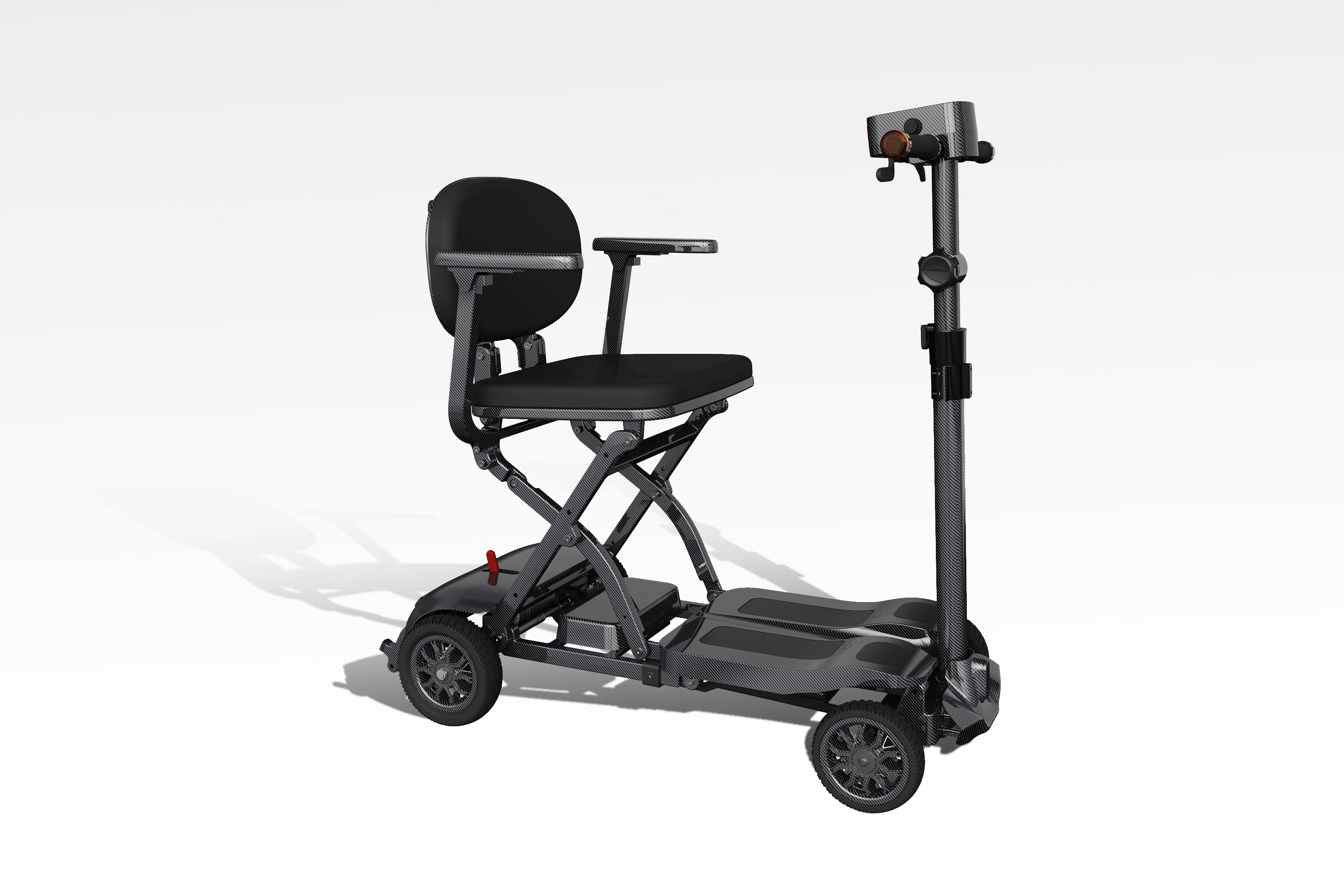
F100 Product Overview
The F100 belongs to the outdoor mobility category. It balances portability with reliable performance on paved surfaces.
Core Positioning
The scooter suits daily movement, shopping, leisure, and travel. Manual folding and low weight simplify storage and vehicle loading. Handlebar controls keep operation simple and intuitive.
Key Advantages
Lightweight construction eases handling. The 180W motor provides steady power for everyday routes. Quick-release batteries and adjustable armrests increase flexibility. IPX4 resistance and air-travel-approved batteries expand real-world use. These features create a versatile platform.
Key Technical Specifications
Accurate figures support informed decisions. The table lists core data drawn from product documentation.
|
Category |
Specification |
Notes |
|
Device weight |
13 kg (excl. battery, armrest, cushion) |
Lightweight base |
|
Max user weight |
120 kg |
Standard capacity |
|
Motor |
180W high-performance |
Daily urban use |
|
Battery |
6Ah × 2 |
Quick-release; air-travel approved |
|
Driving range |
Up to 25 km |
Varies with conditions |
|
Max speed |
4 MPH |
Controlled performance |
|
Max incline |
10° |
Stable climbing |
|
Obstacle clearance |
4 cm |
Practical for urban surfaces |
|
Turning radius |
100 cm |
Maneuverable |
|
Folding |
Manual fold |
Compact storage |
|
Armrest width |
44–48 cm (adjustable) |
Personalized fit |
|
Charging time |
≈ 5 hours |
Convenient overnight |
|
Water resistance |
IPX4 |
Light weather protection |
|
Safety features |
Anti-tip design, lights |
Everyday confidence |
Full data sheets include additional dimensions and material notes. Request the latest version during evaluation.
Customization Options
The F100 platform accepts modular adjustments that match different preferences.
Available Modules
Color and finish options support visual differentiation. Branding, seat materials, and cushion choices can be specified. Battery capacity variants, accessory packages, and packaging configurations are commonly addressed. Control and comfort features may be refined within platform limits.
Process Flow
Discussions start with clear requirements. Samples follow for hands-on review. Production planning and logistics arrangements complete the sequence. Consistent communication keeps each stage on track.
Procurement Checklist
A structured sequence reduces uncertainty and supports smooth progress.
Step 1: Confirm Market Requirements
Identify relevant regulations, safety standards, and labeling rules for intended regions. Note certification priorities at the outset.
Step 2: Review Specs and Request Full Data Sheet
Compare published figures against needs. Obtain the complete data sheet, drawings, and any available test summaries.
Step 3: Discuss Customization and Volume
Outline preferred colors, branding, battery options, accessories, and packaging. Clarify quantities and any related implications.
Step 4: Request Samples and Conduct Testing
Evaluate folding ease, ride stability, battery performance, and build quality. Test under representative conditions.
Step 5: Quality Control and Compliance
Review quality processes and available documentation. Verify alignment with target-market rules.
Step 6: Pricing, Payment Terms, and Lead Time
Confirm pricing structure, payment schedules, and production timelines. Account for customization effects on schedules.
Step 7: Logistics, Packaging, and Support
Discuss packaging standards, shipping methods, and spare-parts availability. Clarify warranty coverage and support channels.
Step 8: Long-Term Considerations
Address spare-parts continuity and ongoing communication pathways. Plan for potential future refinements.
These steps create a clear, documented foundation.
Quality, Certifications & Compliance
Structured quality processes apply across the mobility range. Supporting documentation is typically available on request.
Independent verification remains essential. Confirm that certifications and labeling satisfy specific regional rules. Differences in classification, electromagnetic compatibility, and battery transport requirements are common. Early clarification avoids later changes.
Comparison with Other SCIFFTO Models
Product choice depends on primary use. The table below shows relative positioning.
|
Model |
Type |
Primary Strengths |
Typical Fit |
|
F100 |
Foldable mobility scooter |
Outdoor stability, simple controls, portability |
Short-to-medium outdoor trips |
|
R100 |
Ultra-light carbon fiber power chair |
Lowest weight, compact fold, air travel |
Frequent mixed travel |
|
E100 |
Foldable power chair |
Compact indoor/outdoor balance |
Travel + daily indoor use |
|
S100 |
Daily power chair |
Longer range options, indoor focus |
Everyday indoor mobility |
The F100 favors an upright scooter-style ride and outdoor confidence. Power-chair models emphasize joystick precision and tighter indoor handling. Review the full range in the SCIFFTO electric wheelchairs and mobility solutions. Additional details appear for the R100 ultra-light carbon fiber wheelchair and E100 foldable electric power chair.
Platform Advantages
Interest in portable outdoor mobility continues. The F100 combines folding convenience, manageable weight, and stable performance. Modular options support differentiation through color, branding, and accessories.
Technical information and supporting materials aid evaluation. Logistics flexibility and spare-parts continuity strengthen longer programs. Background information is available in About SCIFFTO.
How to Begin the Process
Start with the F100 foldable lightweight mobility scooter. Review current specifications and images. Prepare a short summary of requirements, preferred customizations, approximate volumes, and key market standards.

Use the channels listed under Contact SCIFFTO. Clear initial information speeds data-sheet delivery, sample planning, and accurate quotation.
Conclusion
The SCIFFTO F100 delivers a practical mix of portability, stability, and customization potential. A methodical checklist covering specifications, samples, compliance, and logistics supports confident decisions. Explore the product details and make contact to obtain precise information and next steps.
FAQs
Q: What factors influence order quantity?
A: Quantities depend on customization level and production planning. Standard configurations often allow more flexibility than heavily modified versions. Exact figures are confirmed during discussion.
Q: How long does sample evaluation usually require?
A: Preparation and shipping timelines vary with configuration and destination. Clear specifications submitted early help shorten the cycle.
Q: Which elements support customization?
A: Common areas include color, branding, seat options, battery capacity within platform limits, accessories, and packaging. Structural changes are reviewed case by case.
Q: What documentation is typically available?
A: Quality and performance materials are provided on request. Confirmation of suitability against local rules remains the responsibility of the evaluating party.
Q: How are warranty and support structured?
A: Warranty terms cover defined components for a stated period. Spare-parts availability and support channels form part of commercial discussions.
Q: What influences payment terms and lead times?
A: Schedules and production timelines are agreed per order. Customization and volume affect both.
Q: Can packaging and logistics be adapted?
A: Yes. Packaging standards and shipping arrangements can align with destination requirements and handling preferences.