
Choosing a lightweight electric wheelchair involves more than simply looking for the lowest product weight. For distributors, medical equipment dealers, and institutional buyers, it is important to understand how weight, folding dimensions, battery configuration, seating, and overall design work together.
Different lightweight electric wheelchairs offer different advantages. Some prioritize compact folding and lightweight construction, while others focus on everyday mobility, adjustable seating, and practical storage.
When comparing products, buyers should look at the actual specifications and consider how each model fits its intended application.
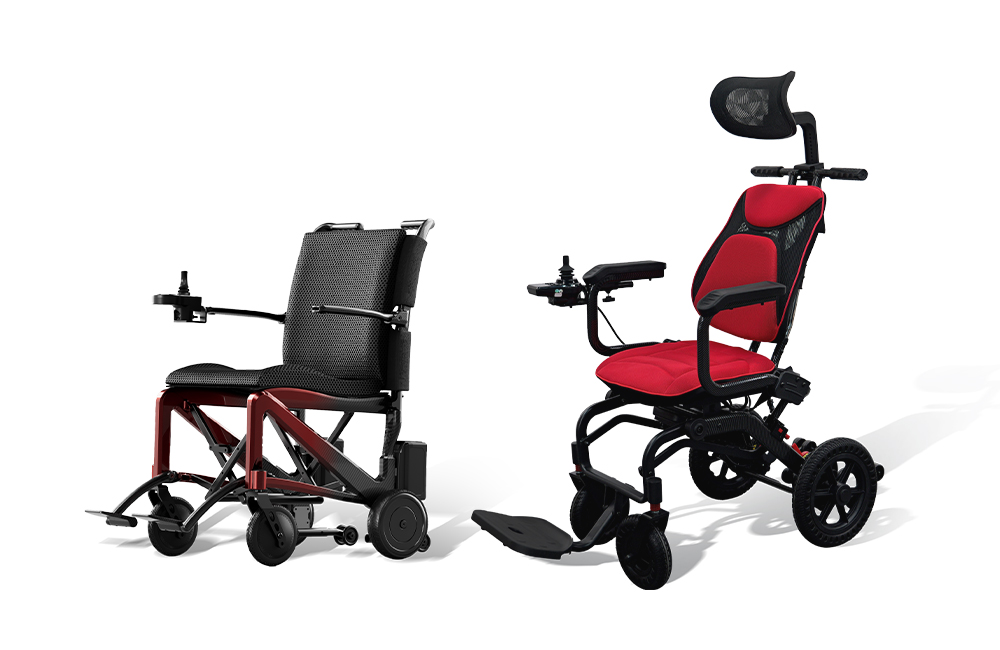
This guide explores the main factors to consider when choosing a lightweight electric wheelchair, using the SCIFFTO R100 and E100 as examples of two different portable mobility solutions.
Compare Net Weight and Battery Configuration
Weight is one of the most important considerations when evaluating a lightweight electric wheelchair. However, the battery configuration should also be considered because it affects the overall device weight.
The SCIFFTO R100 has a net weight of 9.8 kg without the battery. It supports several battery configurations, with different corresponding device weights.
SCIFFTO R100 Weight
| Battery Configuration | Device Weight |
|---|---|
| Without battery | 9.8 kg |
| 6Ah | 10.7 kg |
| 12Ah | 11.6 kg |
| 16Ah | 11.9 kg |
| 20Ah | 12.2 kg |
The carbon fiber construction and compact folding design are important characteristics of the R100. Its available battery options also allow buyers to select a configuration according to their intended mobility requirements.
The SCIFFTO E100 has a net weight of 18.8 kg, excluding the battery and including the controller.
These figures describe the respective products under their stated measurement conditions. For a complete product comparison, buyers should consider both the standard device configuration and the selected battery option.
For distributors, these specifications are useful when evaluating product positioning, handling requirements, and transportation arrangements.
Check Folding Dimensions for Storage and Transportation
A lightweight electric wheelchair should also be practical to store and transport.
Folded dimensions help buyers understand how much space a wheelchair requires when it is not in use. This is particularly relevant for customers who need to store their mobility equipment at home or transport it in a vehicle.
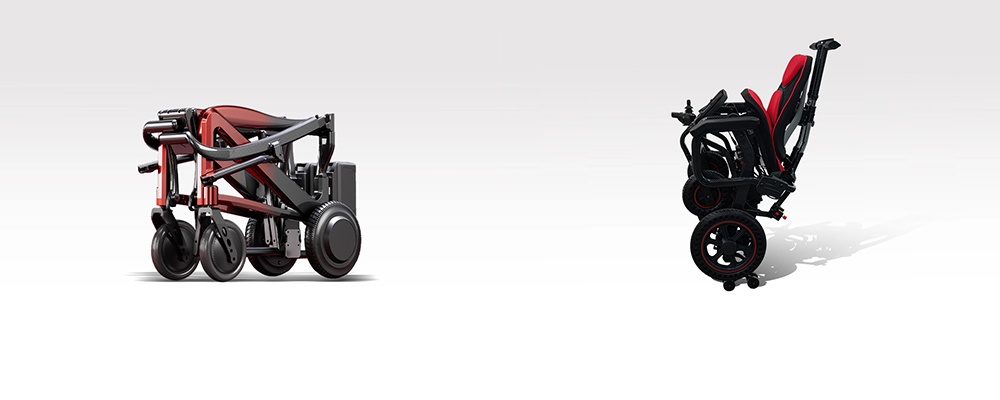
The SCIFFTO R100 and E100 feature different folding structures.
| Specification | R100 | E100 |
|---|---|---|
| Folded Dimensions (L × W × H) | 56 × 27 × 43 cm | 56 × 43.5 × 71 cm |
| Measurement Condition | Folded | Without backrest |
The R100 features a compact folding structure, with a particularly narrow folded width. This makes it an option for customers who prioritize compact storage.
The E100 has a different folding configuration, with its listed dimensions measured without the backrest. Its folding design provides another practical option for everyday storage and transportation.
For distributors, these differences help establish clearer product positioning and make it easier to recommend products based on customer storage requirements.
Consider Frame Material and Product Design
Frame construction is an important feature when comparing lightweight electric wheelchairs.
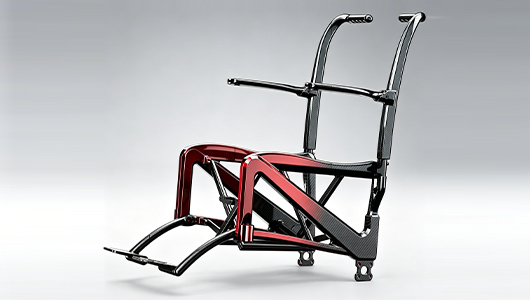
The SCIFFTO R100 uses a carbon fiber frame, making its material construction a key part of its lightweight product positioning.
Carbon fiber is used in products where reducing structural weight is an important design consideration. For the R100, this construction is combined with a compact folding structure and multiple battery options.
The overall product design should also be considered alongside material selection. Folding mechanisms, wheel configuration, seating dimensions, and component arrangements all contribute to how a wheelchair functions in everyday use.
For buyers, looking at the complete product design provides a more useful understanding than considering frame material alone.
Evaluate Seating Dimensions and User Comfort
A lightweight electric wheelchair should also provide seating dimensions appropriate for its intended users.
Seat width, seat depth, seat height, and backrest dimensions are important when selecting mobility equipment for different customer groups.
The SCIFFTO R100 and E100 offer different seating configurations.
| Seating Specification | R100 | E100 |
|---|---|---|
| Seat Width | 39 cm | 42–46 cm |
| Seat Depth | 43 cm | 40 cm |
| Seat Height | 48 cm | 51.5 cm from ground |
| Backrest Height | 38 cm | 43.5–47.5 cm |
The R100 provides a 39 cm seat width and a 43 cm seat depth.
The E100 features an adjustable seat width from 42 cm to 46 cm, offering additional flexibility for customers with different seating preferences.
These differences can help distributors select suitable products for different target users and mobility requirements.
Seating dimensions should always be considered together with the intended user group and the product's maximum load capacity.
Review Battery Options and Charging Convenience
Battery configuration is another important consideration when choosing a portable electric wheelchair.
Different battery options can influence device weight, charging arrangements, and the intended mobility application.
The SCIFFTO R100 supports four battery capacity options:
- 6Ah
- 12Ah
- 16Ah
- 20Ah
Each option has a corresponding device weight, allowing buyers to compare the available configurations.
The SCIFFTO E100 also features a removable battery system, providing flexibility for charging and battery replacement arrangements.
For distributors, understanding battery options can help when planning product configurations for different customer markets.
For customers planning air travel, battery acceptance depends on the actual battery energy rating in Wh, airline policies, and applicable transportation requirements. A removable battery does not automatically guarantee airline approval.
Match the Wheelchair to Its Intended Application
Although the R100 and E100 both belong to the portable electric wheelchair category, they offer different product characteristics.
SCIFFTO R100: Lightweight Carbon Fiber Design
The SCIFFTO R100 combines a carbon fiber frame, compact folding dimensions, and a lightweight structure.
Its 9.8 kg net weight without the battery and its available battery configurations make it suitable for buyers looking for a compact product with multiple battery options.
Its narrow folded dimensions are also relevant for customers who prioritize storage space and convenient transportation.
SCIFFTO E100: Practical Folding for Everyday Mobility
The SCIFFTO E100 provides a practical folding configuration for everyday mobility.
Its adjustable seat width, removable battery system, and seating dimensions make it suitable for a range of residential and community mobility applications.
Its larger folded dimensions compared with the R100 provide a different product configuration for buyers to consider.
For distributors, offering products with different design characteristics can help address a wider range of customer requirements instead of relying on a single model for every application.
Consider Wheel Configuration and Overall Dimensions
Wheel configuration and overall dimensions are also important when evaluating a lightweight electric wheelchair.
Different wheel sizes and product dimensions contribute to the overall design and should be considered in relation to the intended usage environment.
SCIFFTO R100 Specifications
| Specification | R100 |
|---|---|
| Motor | 150W × 2 |
| Front Wheel Diameter | 6 inches |
| Rear Wheel Diameter | 6 inches |
| Unfolded Dimensions (L × W × H) | 89 × 49 × 85 cm |
| Folded Dimensions (L × W × H) | 56 × 27 × 43 cm |
| Net Weight | 9.8 kg (without battery) |
SCIFFTO E100 Specifications
| Specification | E100 |
|---|---|
| Overall Length | 112.2–115 cm |
| Overall Width (large wheel) | 53 cm |
| Overall Height | 89–92 cm |
| Front Wheel Diameter | 8 inches |
| Rear Wheel Diameter | 12 inches |
| Approximate Outer Carton Dimensions | 58 × 48 × 90 cm |
| Maximum Load Capacity | 120 kg |
For the E100, the overall length includes auxiliary wheels and excludes the headrest. The overall height also excludes the headrest.
The outer carton dimensions are approximate and provide a reference for transportation and storage planning.
For distributors, these specifications help with product selection, warehouse planning, and shipment arrangements.
Key Considerations When Choosing a Lightweight Electric Wheelchair
When comparing lightweight electric wheelchairs, buyers should consider the complete product configuration rather than focusing on a single specification.
The following factors provide a practical starting point:
| Comparison Factor | Key Considerations |
|---|---|
| Product Weight | Net weight and available battery configurations |
| Folding Design | Folded length, width, and height |
| Frame Construction | Product design and material characteristics |
| Seating | Seat width, depth, and height |
| Battery | Capacity options and removable battery design |
| Wheels | Front and rear wheel configurations |
| Dimensions | Overall size and storage requirements |
| Applications | Residential, community, and transportation needs |
A well-rounded evaluation helps buyers understand how different products fit their target markets and customer requirements.
Conclusion
Choosing a lightweight electric wheelchair involves more than finding the lowest advertised weight or the smallest folded size.
Buyers should consider the complete product configuration, battery options, folded dimensions, frame construction, seating measurements, wheel design, and intended applications.
The SCIFFTO R100 and E100 demonstrate two different approaches to portable electric wheelchair design.
The R100 focuses on carbon fiber construction, lightweight design, and compact folding. The E100 offers a practical folding configuration with adjustable seating and everyday mobility applications.
For distributors and institutional buyers, understanding these differences can help build a more suitable product range and provide customers with options that match their actual mobility requirements.
Explore the SCIFFTO electric wheelchair range to learn more about available portable mobility solutions and product configurations.
For detailed product specifications and OEM cooperation, contact the SCIFFTO team.
Frequently Asked Questions
1. What should buyers compare when choosing a lightweight electric wheelchair?
Buyers should compare product weight, battery configuration, folding dimensions, frame construction, seating measurements, wheel configuration, and intended applications.
2. What is the net weight of the SCIFFTO R100?
The SCIFFTO R100 has a net weight of 9.8 kg without the battery. Its device weight varies according to the selected battery configuration, ranging from 10.7 kg with the 6Ah option to 12.2 kg with the 20Ah option.
3. What is the net weight of the SCIFFTO E100?
The SCIFFTO E100 has a listed net weight of 18.8 kg, excluding the battery and including the controller.
4. What are the folded dimensions of the SCIFFTO R100?
The R100 has folded dimensions of 56 × 27 × 43 cm (L × W × H).
5. What are the folded dimensions of the SCIFFTO E100?
The E100 has folded dimensions of 56 × 43.5 × 71 cm (L × W × H), measured without the backrest.
6. What is the difference between the SCIFFTO R100 and E100?
The R100 focuses on carbon fiber construction, compact folding, and lightweight design. The E100 provides a practical folding configuration with adjustable seating and everyday mobility applications.