
Introduction
For distributors and mobility equipment suppliers, choosing an all-terrain electric wheelchair requires more than comparing advertised specifications. Terrain conditions, drive systems, tire design, and product configuration all affect whether a model fits the target market.
Identify Terrain Requirements for Your Target Market
Before comparing various products, buyers should first determine the environments in which their customers will be using them.
Indoor-Outdoor Transitions vs. Challenging Outdoor Terrain
Not all electric wheelchairs marketed as "all-terrain" offer the same level of performance. Some models are suited for smooth indoor surfaces, paved paths, and occasional rough patches, while others feature four-wheel drive systems, larger pneumatic tires, and specialized chassis designs capable of handling more demanding outdoor environments.
For commercial buyers, the key to selecting the right product lies in the actual intended environment of use.
|
Application requirement |
Key considerations |
|
Indoor and paved outdoor use |
Overall dimensions, turning space, and maneuverability |
|
Mixed indoor-outdoor environments |
Tire design, drive configuration, and surface transitions |
|
Uneven outdoor terrain |
Traction, wheel layout, and chassis stability |
|
Specialized outdoor applications |
Positioning functions, control systems, and terrain capability |
A model with more advanced features is not automatically the right choice. Distributors should match product capabilities with the needs of their customer base instead of paying for functions that may rarely be used.
Identify the Surfaces and Operating Conditions
Terrain requirements should be defined based on specific surface types, rather than by using broad, generic labels like "outdoor" or "off-road." Surfaces such as gravel, grass, sand, soft soil, and snow each place different demands on tire performance, traction, and chassis stability.
Buyers should consider three factors:
- Surface conditions: Which surfaces will the wheelchair encounter most often?
- Usage frequency: Will it be used outdoors occasionally or operate across varied terrain every day?
- Environmental conditions: Will it need to handle moisture, loose materials, or changing weather?
Clarifying these details before reviewing technical specifications will help in establishing realistic performance requirements.
Match Terrain Requirements with Commercial Applications
Different customer segments have different priorities. Rehabilitation facilities may focus on maneuverability and seating adjustment, while outdoor mobility retailers may place greater emphasis on traction and chassis stability.
|
Target market |
Main purchasing considerations |
|
Rehabilitation facilities |
Seating adjustment, positioning functions, and maneuverability |
|
Hospitals and care institutions |
Indoor-outdoor adaptability, stability, and ease of control |
|
Public facilities and campuses |
Surface adaptability, turning space, and regular-use performance |
|
Outdoor mobility retailers |
Traction, tire configuration, and varied-terrain capability |
For SCIFFTO, the C400 series represents an ideal choice for markets requiring more specialized outdoor mobility solutions. Its four-wheel-drive platform and large pneumatic tires are engineered to handle diverse terrain, while a range of configuration options addresses specific user needs regarding postural support and transfers.
The commercial value lies in the ability to provide tailored configurations that align precisely with a client’s specific requirements. For instance, a dealer sourcing standard electric wheelchairs has different functional needs than one focused on building a specialized outdoor mobility product line. Recognizing this distinction facilitates the creation of more targeted product portfolios and makes the process of recommending products both easier and more efficient.
Evaluate the Drive System and Traction Capability
Drive configuration directly affects how an electric wheelchair moves across different surfaces. Buyers should look beyond the number of driven wheels and examine motor configuration, power delivery, and control response.
4WD vs. Standard Drive Configurations
Overall dimensions directly affect where a wheelchair can operate. A model designed for outdoor use may have strong traction but still be difficult to maneuver through narrow corridors, doorways, elevators, or indoor facilities.
SCIFFTO C400 has a listed width of 65 cm and a length of 88 cm without footrests. Its length with footrests ranges from 105 to 130 cm. These measurements give distributors a practical reference when assessing compatibility with customer facilities.
Before placing an order, buyers should compare product dimensions with the access requirements of their target applications. Turning radius, overall length, and footrest configuration should all be considered rather than judging maneuverability by width alone.
Ramp Performance and Obstacle-Crossing Capability
Ramps and raised obstacles place distinct demands on a wheelchair’s drive system and chassis. Buyers should verify that the wheelchair can maintain controlled movement when ascending or descending slopes, or when traversing uneven terrain.
Key technical specifications include:
- Maximum tested incline, along with the specific conditions under which this figure was determined.
- Obstacle-crossing capability, including the type of obstacles used during testing.
- Maximum load applied during performance testing.
- Braking response when traveling downhill.
- Potential variations in performance based on battery charge levels or different ground conditions.
SCIFFTO has released technical information regarding dynamic deceleration and terrain adaptability, which includes reference tests involving ramps and obstacles. Before incorporating this data into product specifications or sales materials, the test conditions should be reviewed, and it should be verified which specific C400 configuration these results apply to.
Handling Stability on Uneven Terrain
Even if a wheelchair has sufficient traction, it can still be very difficult to control if its path becomes unpredictable on uneven ground. During a product demonstration, buyers should pay close attention to how the wheelchair performs when turning, changing speed, or coming to a stop, as well as how it reacts when its wheels encounter variations in the ground surface.
Confirming Seating Configuration and Functional Requirements
All-terrain capability is only one aspect of the value offered by commercial mobility products. Some user groups may also require features such as postural support, transfer assistance, or adjustable seating. Before selecting a specific configuration, the buyer should clearly define these needs.
For example, SCIFFTO's C400 range includes different configurations for specialized applications:
|
Configuration |
Main functional direction |
|
C400 |
Four-wheel-drive all-terrain mobility |
|
C400 Verticalizing |
Standing assistance |
|
C400 Horizontal |
Horizontal positioning and transfer support |
|
C400 Stair Climbing |
Stair-climbing capability |
Because these models address distinct requirements, buyers should not view the various configurations as freely interchangeable. Retailers focusing on outdoor mobility needs might prefer a standard all-terrain platform, whereas institutional buyers may require additional features for postural support or transfer assistance.
Furthermore, factors such as seat width, seat depth, backrest adjustability, headrest design, and footrest configuration should be evaluated based on the specific needs of the intended users. The core objective is to select a configuration that meets actual operational requirements without incorporating unnecessary or redundant features.
Verify Specifications and Performance Before Bulk Purchasing
A product specification sheet outlines a product's technical parameters, but it does not necessarily reflect how the product will perform in a real-world, practical environment. For distributors and importers, verifying these details prior to bulk procurement helps minimize issues such as product non-compliance, customer complaints, and unnecessary after-sales costs.
Compare Test Conditions, Not Just Advertised Numbers
When comparing different all-terrain electric wheelchairs, buyers should verify whether the technical specifications are based on comparable conditions.
For instance, the nominal range is influenced by various factors, including battery capacity, the user's weight, terrain, travel speed, and the operating environment. Similarly, metrics such as maximum climbing angle and obstacle-traversing capability are only meaningful when the specific testing conditions are clearly defined.
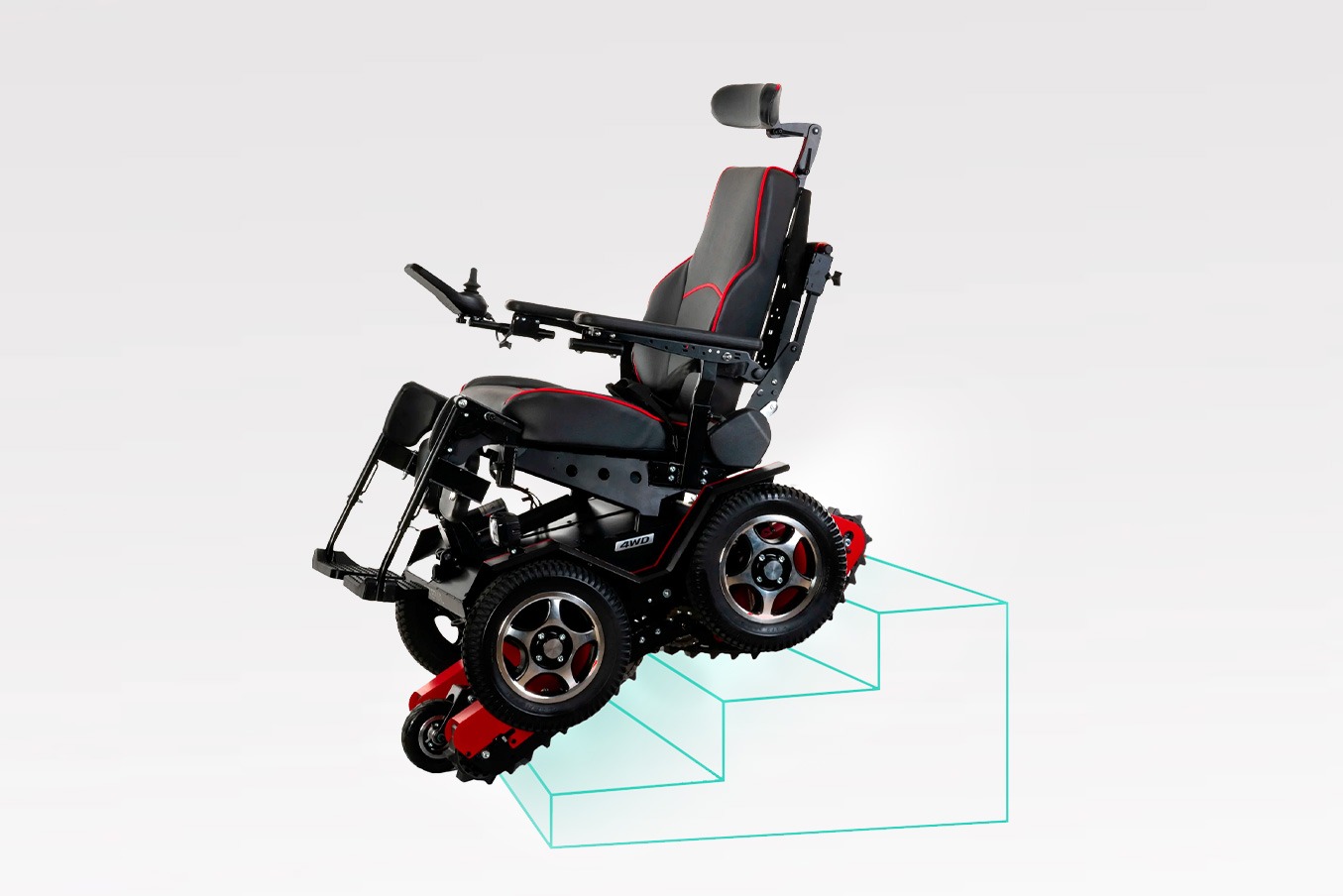
Standard configuration of the SCIFFTO C400 model includes a 42 Ah lithium battery, offering a nominal range of 30 kilometers; an optional battery configuration is also available, providing a nominal range of up to 60 kilometers. While these figures can serve as a reference for product evaluation, dealers should confirm the specific battery configuration and testing conditions before making any comparisons.
Request Product Demonstrations and Technical Documentation
Before confirming a bulk order, buyers should request supporting documentation from the supplier to verify that the product meets all the requirements identified during market research.
Relevant documentation may include:
- Comprehensive product specifications and dimensional drawings.
- Detailed information regarding the drive system, motor, tires, and battery.
- Test videos demonstrating the product’s performance on specific types of terrain.
- Details concerning testing conditions for inclines and obstacles.
- User manuals, maintenance instructions, and information on available spare parts.
- If feasible, samples should be requested for on-site evaluation.
Product demonstrations should not be limited to straight-line travel; they should also showcase performance during turns, braking, starting on uneven ground, and transitioning between different types of surfaces.
Establish a Pre-Order Evaluation Checklist
A simple checklist can make it easier for procurement teams to compare suppliers and document their decisions.
|
Evaluation item |
What buyers should verify |
|
Drive system |
Motor configuration, 4WD operation, and control modes |
|
Tires |
Diameter, construction, tread, and maintenance requirements |
|
Chassis |
Dimensions, ground clearance, and structural design |
|
Terrain performance |
Tested surfaces, slope conditions, and obstacle clearance |
|
Seating |
Adjustment range and available functional configurations |
|
Battery |
Capacity, charging requirements, and tested driving range |
|
Documentation |
Technical specifications, manuals, and maintenance guidance |
The final decision should be based on verified technical specifications and actual performance.
Consider Commercial Fit and Long-Term Product Value
A wheelchair with superior technical performance must also be commercially viable. Distributors should evaluate whether a specific model fills a gap in their existing product portfolio, whether local customers have a genuine need for its features, and whether the supplier can guarantee the fulfillment of future orders.
For SCIFFTO, the C400 platform serves as an ideal solution for partners specializing in all-terrain mobility aids and specialized care equipment. Its versatile configuration options allow distributors to flexibly address the needs of clients with varying requirements for positioning and transfers (such as moving from a wheelchair to a bed or another seat). SCIFFTO also offers OEM (Original Equipment Manufacturer) and ODM (Original Design Manufacturer) partnership models, enabling partners to tailor branding and product configurations to the specific demands of their local markets.
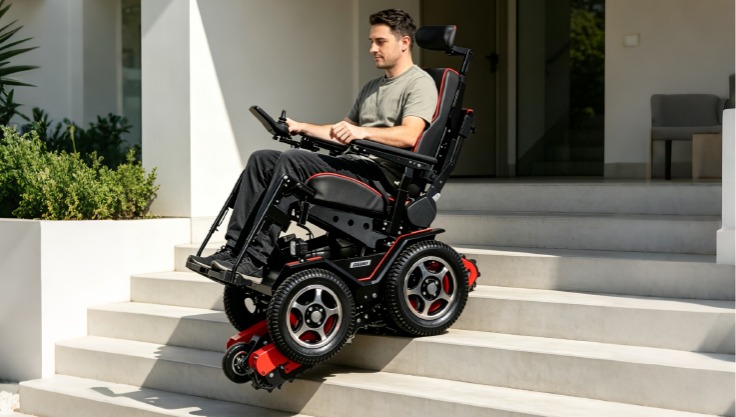
Before adding a product to your portfolio, consider the following three factors:
- Target Customer Needs: Is there a clear market demand for specialized all-terrain mobility aids?
- Operational Costs: Does your local team have the capability to maintain components such as tires, batteries, and other wear-and-tear or replaceable parts?
- Supplier Support: Can the manufacturer provide technical documentation, spare parts, configuration guidance, and a reliable supply for future orders?
By evaluating these aspects, buyers can look beyond the initial purchase price to assess the full value of a product and determine whether it can support a sustainable business.
Conclusion
Evaluating an all-terrain electric wheelchair requires a comprehensive assessment of its drive system, tires, chassis, handling performance, and verified operational metrics. The SCIFFTO C400 platform—featuring four-wheel drive (4WD), large pneumatic tires, and a wide range of functional configurations—is purpose-built for diverse, specialized mobility scenarios. Please contact SCIFFTO to discuss the technical specifications and configuration options for the C400, as well as potential OEM/ODM partnership opportunities tailored to your market.
FAQs
What makes an electric wheelchair suitable for all-terrain use?
An all-terrain electric wheelchair typically combines an appropriate drive system, suitable tires, a stable chassis, and control features designed for uneven surfaces. Buyers should assess these components together rather than relying on a single feature such as 4WD.
Is a 4WD electric wheelchair always better than a standard power chair?
No. Four-wheel drive is useful when customers need additional traction across varied or uneven surfaces. For markets focused mainly on indoor mobility and paved paths, a standard drive configuration may be more practical and cost-effective.
What terrain conditions should buyers test before ordering?
Buyers should identify the surfaces common in their target market, such as gravel, grass, sand, soft ground, or snow. Testing should also cover slopes, surface transitions, turning, and braking under clearly defined load and operating conditions.
Why do tire size and chassis design matter?
Tire dimensions and construction affect ground contact, cushioning, and obstacle handling. Chassis design influences ground clearance, weight distribution, and overall stability. Both should be evaluated alongside the drive system.
What should distributors check before purchasing all-terrain electric wheelchairs in bulk?
Distributors should verify technical specifications, battery configuration, terrain test conditions, dimensions, seating functions, documentation, spare parts availability, and sample performance. They should also confirm that the selected configuration meets the needs of their target customers.
Does SCIFFTO offer different all-terrain wheelchair configurations?
Yes. SCIFFTO's C400 platform includes the standard C400, C400 Verticalizing, C400 Horizontal, and C400 Stair Climbing configurations. Each addresses different mobility or positioning requirements. Buyers should confirm the functions and specifications of the specific configuration they intend to purchase.