
Moving a person from a bed to a wheelchair is not the same as simply driving a wheelchair from one place to another.
In care and rehabilitation environments, transfer can become one of the most important parts of the mobility process. The space around the user, the position of the seat, and the relationship between the wheelchair and the destination surface can all affect how the transfer is carried out.
The SCIFFTO C400 Horizontal is developed around this type of mobility requirement. Rather than treating transfer as a separate task, the platform integrates horizontal positioning and transfer-oriented functions into the mobility product itself.
This creates a different approach to electric wheelchair design, where movement and transfer can be considered together.
Why Horizontal Transfer Matters
Transfer is often the point where mobility equipment and daily care routines meet.
A user may need to move between a bed and a wheelchair, reposition within a care environment, or move laterally from one surface to another.
These movements are not always convenient when the wheelchair is designed only for forward driving and seated mobility.
The distance between the wheelchair and the destination, the user's position, and the available space can all affect the process.
For this reason, a mobility product designed with transfer in mind can address a different problem from a conventional power chair.
The objective is not simply to move the user to the destination.
It is to consider how the user gets onto the mobility platform, how the position changes, and how the product supports the next stage of movement.
From Driving to Transfer Oriented Mobility
Traditional electric wheelchairs are primarily designed around powered movement.
The C400 Horizontal takes a broader approach by incorporating positioning and transfer-oriented functions into the same platform.
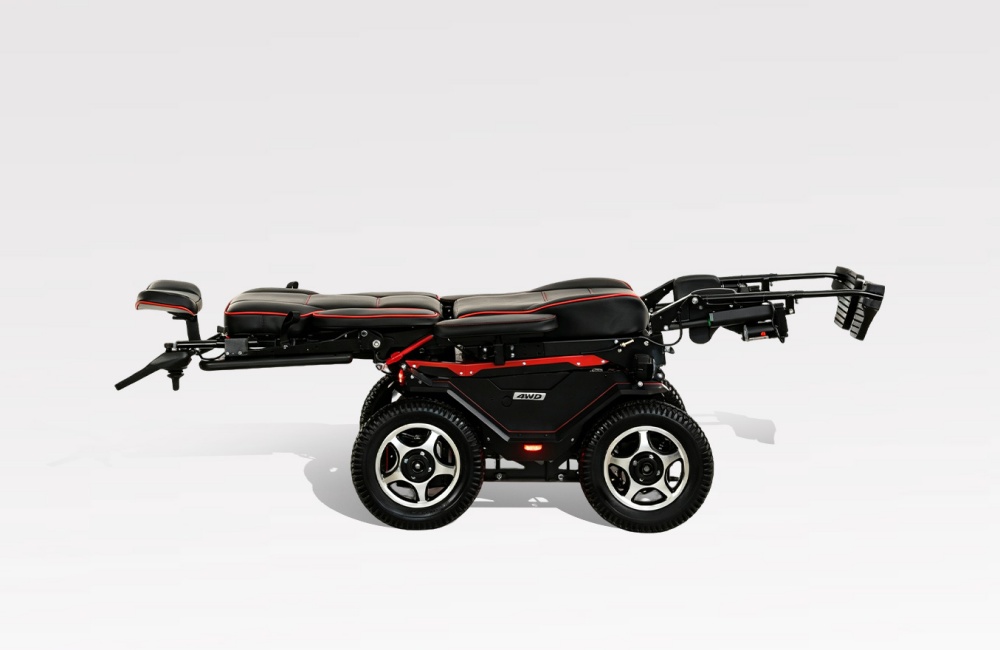
The C400 platform supports horizontal adjustment and flat positioning, along with transfer-related functions such as bed-to-chair and lateral transfer mechanisms.
This means that transfer is treated as part of the product architecture rather than an unrelated process that happens outside the wheelchair.
For care environments, that distinction can be important.
A mobility product may be used repeatedly throughout the day, and every additional movement between equipment can add another step to the overall routine.
Bed to Chair Transfer as a Real Mobility Requirement
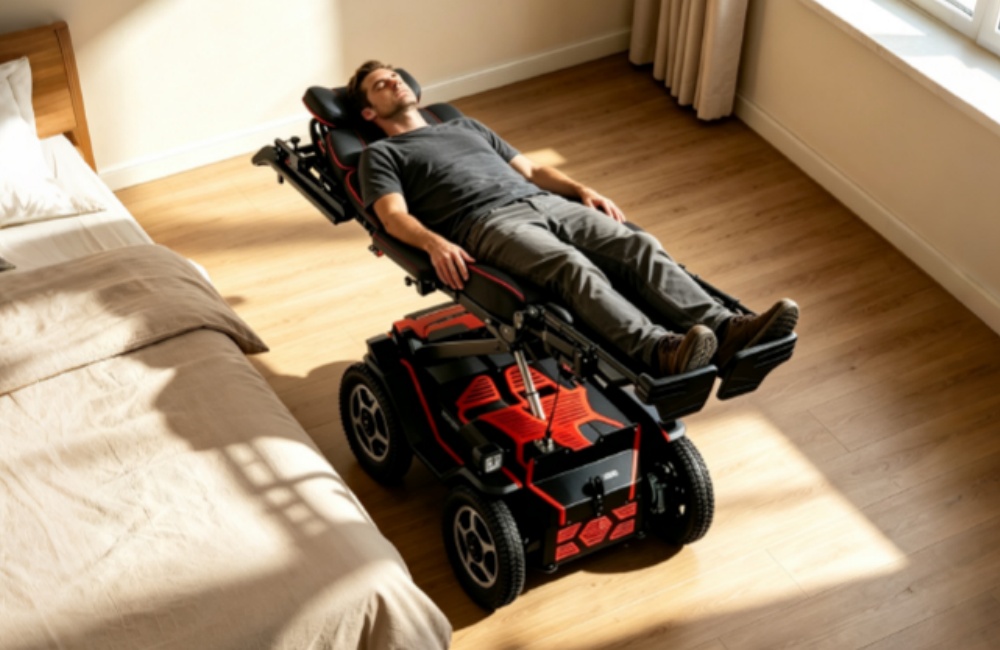
Bed-to-chair transfer is a common example of why mobility and positioning need to work together.
The user may start from a resting position and need to transition onto a mobility platform before moving to another location.
A wheelchair that only provides a standard seated position may not be designed around this transition.
The C400 Horizontal is built around a platform that can provide different positioning options, including horizontal adjustment and flat positioning.
This allows the transfer requirement to be considered within the vehicle design itself rather than being treated as a completely separate activity.
For professional users and care teams, this can make the product easier to evaluate as part of a wider mobility workflow.
Lateral Transfer Requires Another Approach
Not every transfer happens from directly in front of a wheelchair.
In some situations, the required movement is lateral.
The user may need to move from one surface to the other from the side, depending on the room layout, bed position, seating arrangement, or care process.
The C400 platform includes transfer-oriented functions for lateral transfer as part of its broader positioning system.
This is important because transfer is not a single standardized movement.
The right solution depends on the relationship between the user, the wheelchair, the surrounding equipment, and the available space.
Positioning Is Part of the Transfer Process
Transfer cannot always be separated from positioning.
The user's posture may need to change before, during, or after the transfer process.
The C400 provides adjustable positioning functions within the platform, including horizontal adjustment and flat positioning.
This gives the product a role beyond transportation.
The wheelchair becomes part of a broader sequence that can include positioning, transfer, movement, and repositioning.
For care-oriented applications, looking at this sequence as a whole can be more useful than evaluating each function separately.
One Platform Instead of Separate Mobility Functions
One of the challenges in professional mobility environments is the need to manage different pieces of equipment for different tasks.
A product may be used for transportation, while another device is needed for transfer or positioning.
The C400 platform takes a more integrated approach by combining mobility, positioning, and transfer-oriented functions. SCIFFTO describes these capabilities as part of a single platform designed to reduce the need to manage multiple specialized devices.
This does not mean every user or facility will need every function.
Instead, it gives distributors and professional buyers another product configuration to consider when transfer is a significant part of the mobility workflow.
Where C400 Horizontal Fits in Care Environments
A transfer-oriented power chair can be relevant in environments where mobility and assisted movement frequently overlap.
Potential applications include:
care facilities
rehabilitation environments
assisted living settings
professional mobility services
home care situations where transfer is part of daily routines
The importance of the product will vary according to the user's condition, environment, and care process.
For this reason, the C400 Horizontal should be viewed as an application-focused mobility solution rather than a universal transfer product for every situation.
What Distributors Need to Understand
For a distributor, a specialized mobility product needs a clear market position.
The C400 Horizontal is not simply another electric wheelchair with additional adjustments.
Its product story is built around a specific operational need: connecting mobility with transfer and positioning.
This creates a clearer way to introduce the product to customers working in care-related or rehabilitation-oriented markets.
Instead of discussing only speed, range, or driving performance, distributors can also discuss how the product fits into daily transfer workflows.
That difference can help a product serve a more specific customer segment.
Why Transfer Functions Matter for Product Development
Transfer requirements also show why mobility product development cannot focus only on driving.
A wheelchair is part of a larger process that can involve getting on the product, positioning the body, moving between locations, and completing daily activities.
When these stages are considered together, design priorities change.
Seat position becomes more important.
Access becomes more important.
The distance between the wheelchair and another surface becomes more important.
The relationship between positioning and movement becomes more important.
This is where a mobility platform can move from being a transportation device toward a more complete care-oriented solution.
A Platform for Different Market Requirements
The C400 series is developed as a broader platform rather than a single-purpose product. In addition to transfer-oriented functions, the platform includes different positioning and mobility configurations for other requirements.
For OEM and ODM partners, this platform approach provides room to consider different functional priorities for different markets.
One partner may need stronger emphasis on transfer.
Another may focus more on positioning.
A different market may require outdoor mobility or multi-level access.
The value of the platform is that these requirements can be considered within an established product architecture rather than starting from an entirely separate product.
From Product Function to Care Workflow
The most useful way to evaluate a transfer-oriented electric wheelchair is not to look at one feature in isolation.
The better question is:
Where does this product fit into the user's mobility and care workflow?
If the answer includes frequent transfers, positioning changes, and movement between different surfaces, then transfer-oriented design becomes more relevant.
The C400 Horizontal is designed around this workflow.
Its purpose is not to replace every transfer method or solve every care situation.
It is to bring mobility, positioning, and transfer functions closer together within one electric wheelchair platform.
A Different Direction in Electric Wheelchair Design
Electric wheelchair development is moving beyond the idea that the vehicle only needs to provide powered movement.
Some applications require more.
They require the product to participate in the wider process of getting the user positioned, transferred, and moved.
The C400 Horizontal represents this direction by combining electric mobility with horizontal positioning and transfer-oriented functions.
For professional users, this provides another way to look at mobility equipment.
For distributors, it creates a specialized product position.
For OEM and ODM partners, it offers a platform for developing mobility solutions around specific care and transfer requirements.
Frequently Asked Questions
Q: What is the C400 Horizontal electric wheelchair?
A: The C400 Horizontal is a C400 platform configuration focused on positioning and transfer-oriented mobility functions, including horizontal adjustment, flat positioning, and transfer-related functions.
Q: Does the C400 support bed-to-chair transfer?
A: Yes. The C400 platform includes transfer-oriented functions such as bed-to-chair transfer mechanisms.
Q: Does the C400 support lateral transfer?
A: Yes. The C400 platform includes transfer-oriented functions for lateral transfer as part of its broader positioning system.
Q: What is horizontal positioning?
A: Horizontal positioning allows the seating position to be adjusted toward a more horizontal configuration. The C400 platform includes horizontal adjustment and flat positioning as part of its positioning functions.
Q: Is the C400 Horizontal only for rehabilitation facilities?
A: No. Its transfer and positioning functions can be considered for care facilities, assisted living, professional mobility services, and other environments where these requirements are relevant. The appropriate configuration depends on the specific user and application.
Q: Why would a distributor consider a transfer-oriented electric wheelchair?
A: It provides a more specialized product position for customers who need mobility combined with positioning and transfer-related functions.
Q: Can the C400 platform support OEM and ODM projects?
A: Yes. SCIFFTO supports OEM and ODM cooperation on the C400 platform, allowing partners to adjust branding, configuration priorities, and functional emphasis for specific market requirements.